
IMZ- Madhubani Painting Style flux
V.1
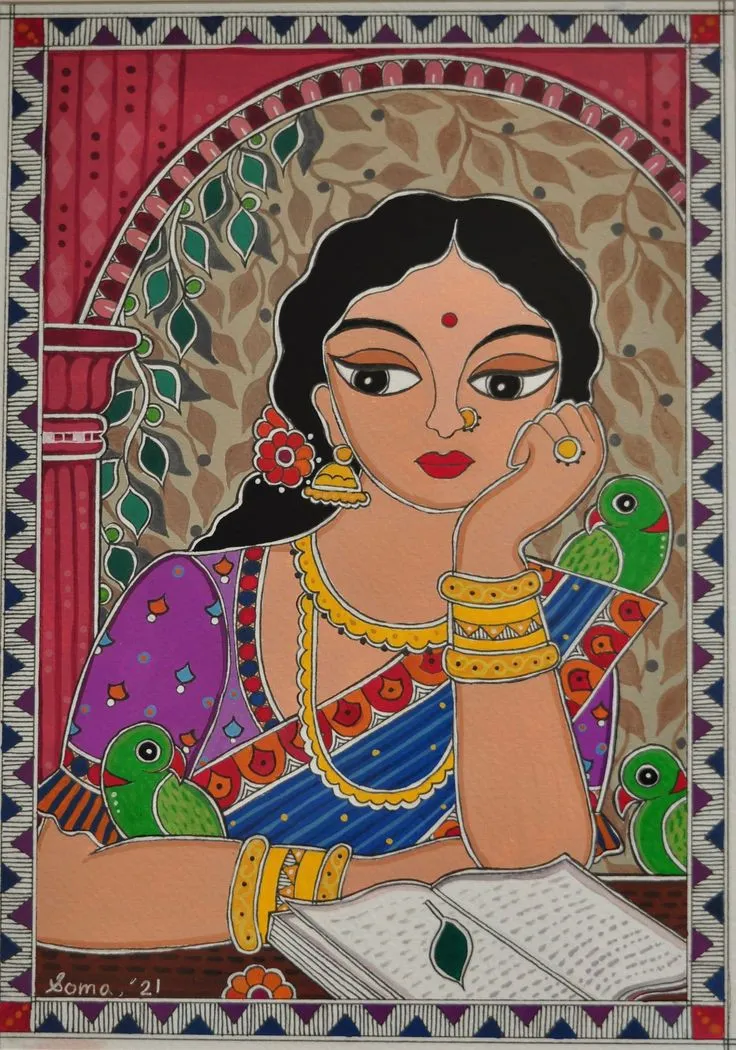
 Image info
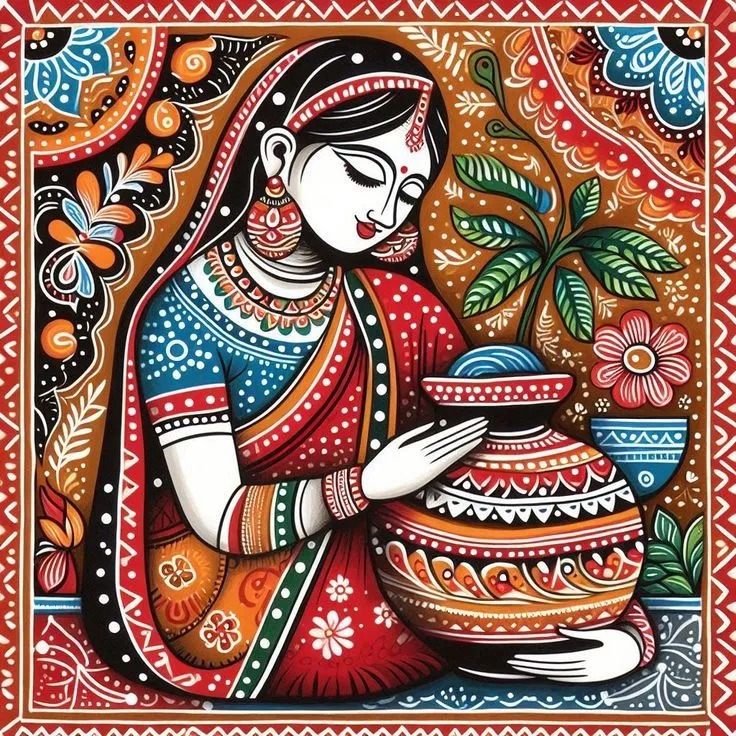 Image info
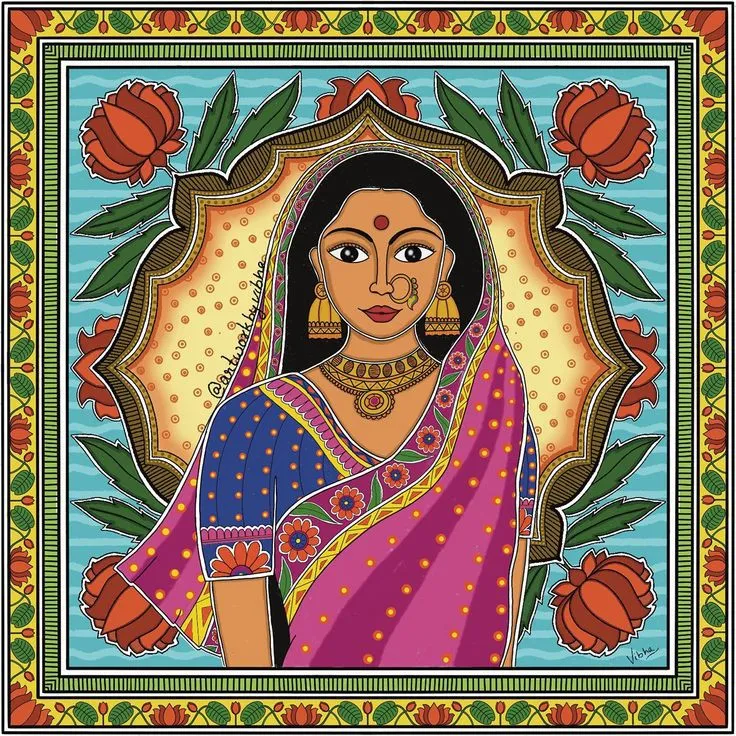 Image info
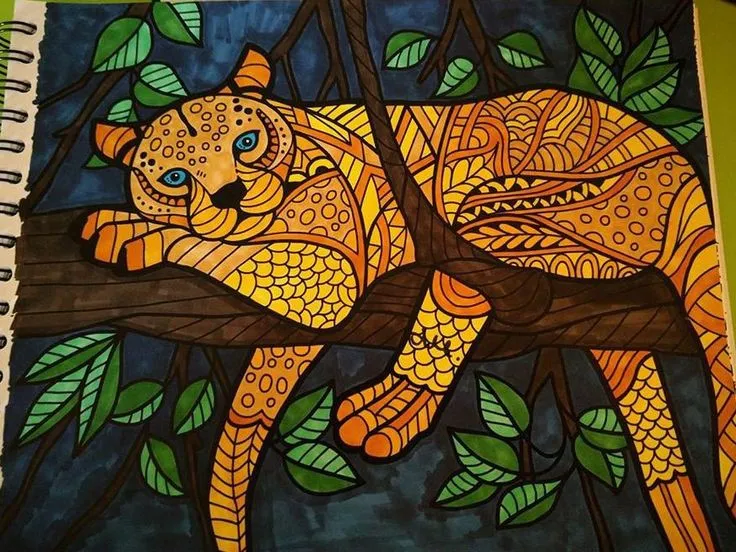 Image info
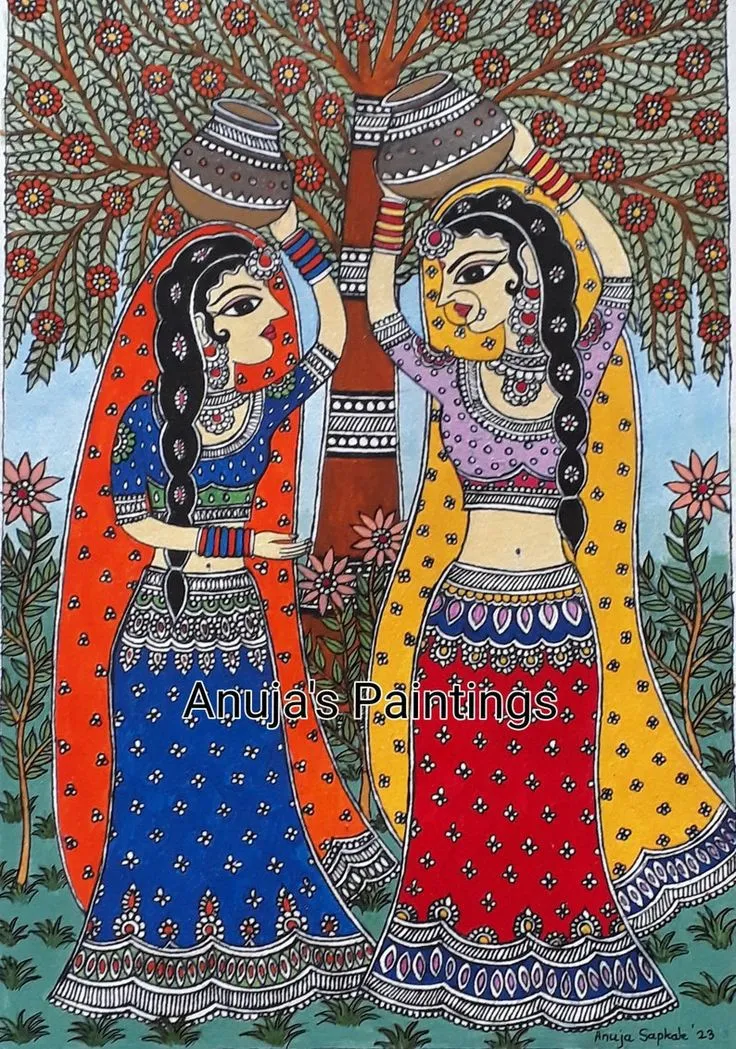 Image info
Madhubani paintings are a rich and vibrant folk art form originating from the Mithila region of Bihar, India, and parts of Nepal. Here are some detailed aspects of the artwork:
**Characteristics and Techniques**
1. **Geometrical and Floral Motifs**:
- Madhubani paintings are known for their intricate geometrical patterns, floral motifs, and animal designs. These patterns are meticulously drawn using fine lines and dots, often with twigs, matchsticks, and fingers[3][4][5].
2. **Use of Natural Colors**:
- The colors used in Madhubani paintings are derived from natural sources. For example:
- Black is obtained by mixing soot with cow dung.
- Yellow is made from turmeric or pollen.
- Blue is derived from indigo.
- Red is obtained from the Kusum flower juice or red sandalwood.
- Green is made from wood apple tree leaves.
- White is made from rice powder.
- Orange is derived from Palasha flowers[1][2][5].
3. **Tools and Substrate**:
- Traditionally, paintings were done on freshly plastered mud walls and floors. Today, they are also created on cloth, handmade paper, and canvas.
- Artists use fingers, twigs, matchsticks, brushes, and nib-pens to create the paintings[1][2][5].
4. **Flat Colors and No Shading**:
- The colors are applied flat with no shading, and no empty space is left in the painting. This characteristic makes the paintings visually dense and vibrant[2][4].
**Themes and Subjects**
1. **Mythological Themes**:
- Madhubani paintings often depict scenes from Hindu mythology, featuring deities like Krishna, Rama, Lakshmi, Shiva, Durga, and Saraswati[1][2][4].
2. **Nature and Social Themes**:
- The paintings also feature natural elements like the sun, moon, fish, bamboo, and elephants, as well as social events such as wedding scenes and daily life[1][2][4].
3. **Cultural and Ritual Significance**:
- Madhubani paintings are often created for specific occasions like birth, marriage, and festivals, reflecting their cultural and ritual significance[2][4].
### **Types of Madhubani Paintings**
1. **Bharni Style**:
- Known for its vibrant colors, Bharni paintings depict Hindu deities and mythological scenes. The enclosed areas are filled with colors like blue, yellow, pink, green, and orange, with subjects outlined in black[3][4][5].
2. **Kachni Style**:
- This style is characterized by the use of monochrome or limited colors, primarily black and vermilion. It focuses on line work and depicts natural aspects with hatching and stippling techniques[3][4][5].
3. **Tantrik Style**:
- This style focuses on religious content, depicting tantric symbols and deities like Mahakali, Mahalakshmi, and Maha Ganesh[3][4][5].
4. **Godna Style**:
- Also known as the tattoo style, Godna paintings feature body motifs, often drawn in black but sometimes filled with colors. These motifs are arranged in parallel lines, concentric circles, or rectangles[3][4][5].
5. **Kohbar Style**:
- Traditionally used to decorate wedding chambers, Kohbar paintings depict wedding ceremonies and symbols of fertility and prosperity to welcome the newlywed couple[3][4][5].
**Symbolism and Patterns**
1. **Geometric Patterns**:
- Circles represent the sun, moon, or the cyclical nature of life, symbolizing harmony and unity.
- Triangles represent mountains, trees, or sacred feminine energy and are used to form the bodies of animals.
- Dots or bindis are used to fill spaces and create intricate patterns[3].
2. **Grids and Borders**:
- Geometric grids and borders are used to define the composition and provide a structured framework for the painting, maintaining symmetry and balance[3].
**Cultural and Artistic Significance**
- **Traditional Practitioners**: Historically, Madhubani paintings were created by women from various communities in the Mithila region. Today, men are also involved in the art form[2][4].
- **Cultural Heritage**: Madhubani paintings reflect the cultural heritage and spirituality of the Mithila region, making them a cherished part of Bihar’s artistic legacy[2][3].
- **Modern Adaptations**: While traditional techniques are still used, modern artists also employ brushes, nib-pens, and synthetic colors to adapt the art form to contemporary tastes[2][4].
These details highlight the richness and diversity of Madhubani paintings, showcasing their unique techniques, themes, and cultural significance.