
Dream Mirror: Lines-punk
 v1.0
v1.0
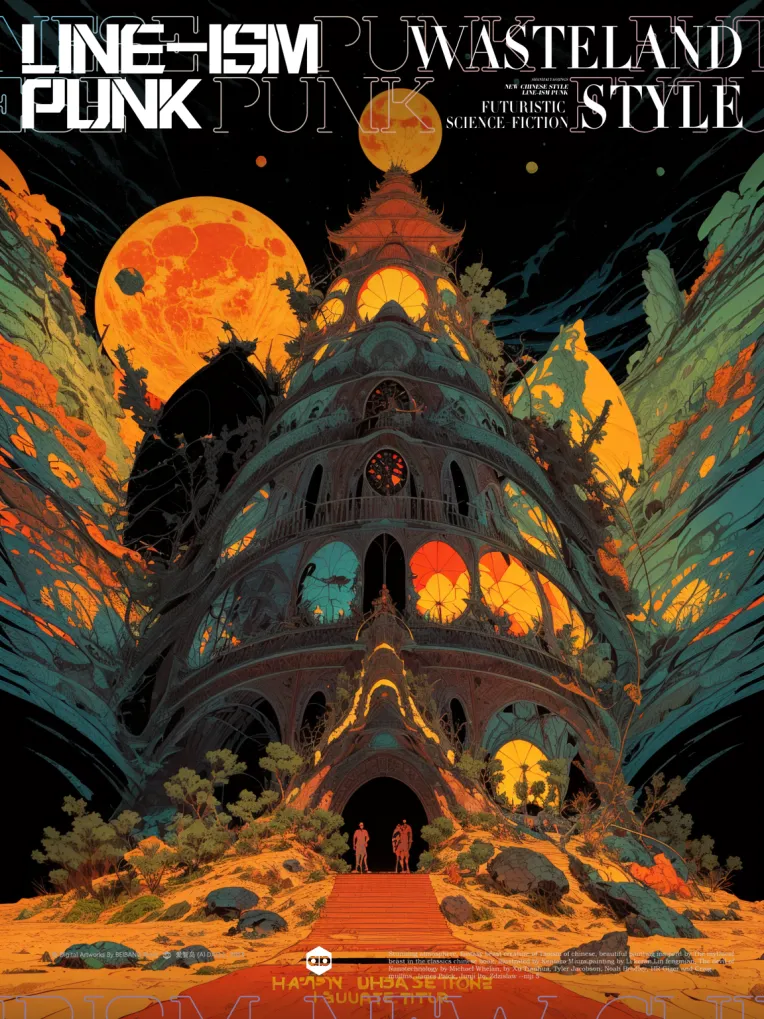
 Image info
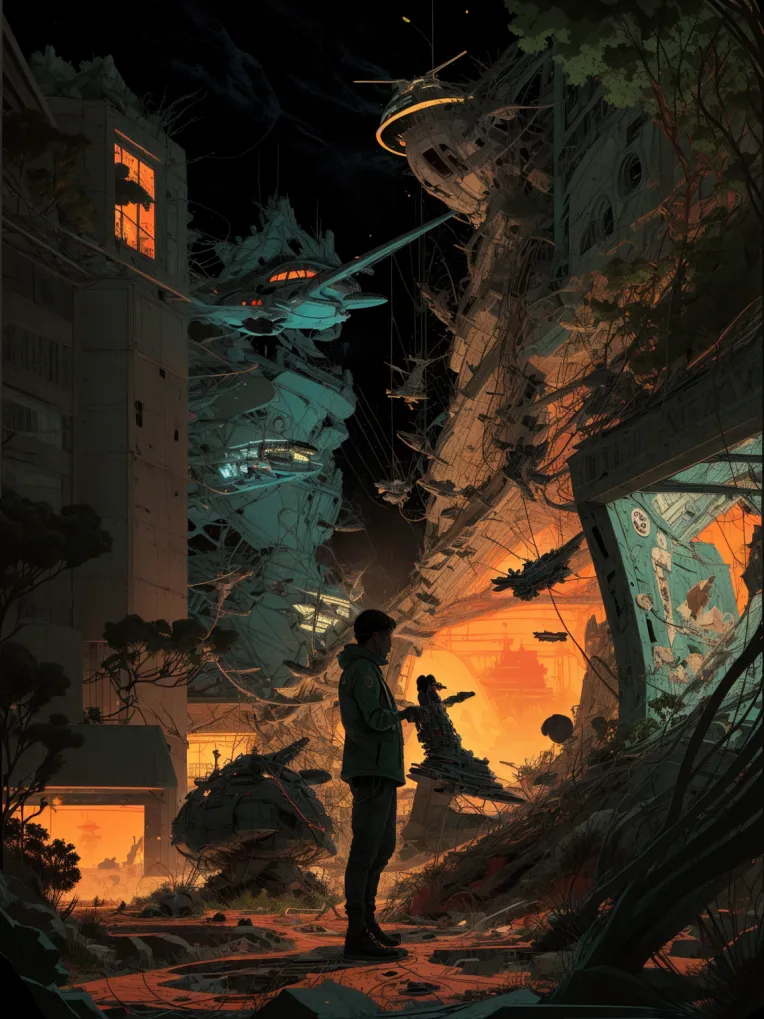 Image info
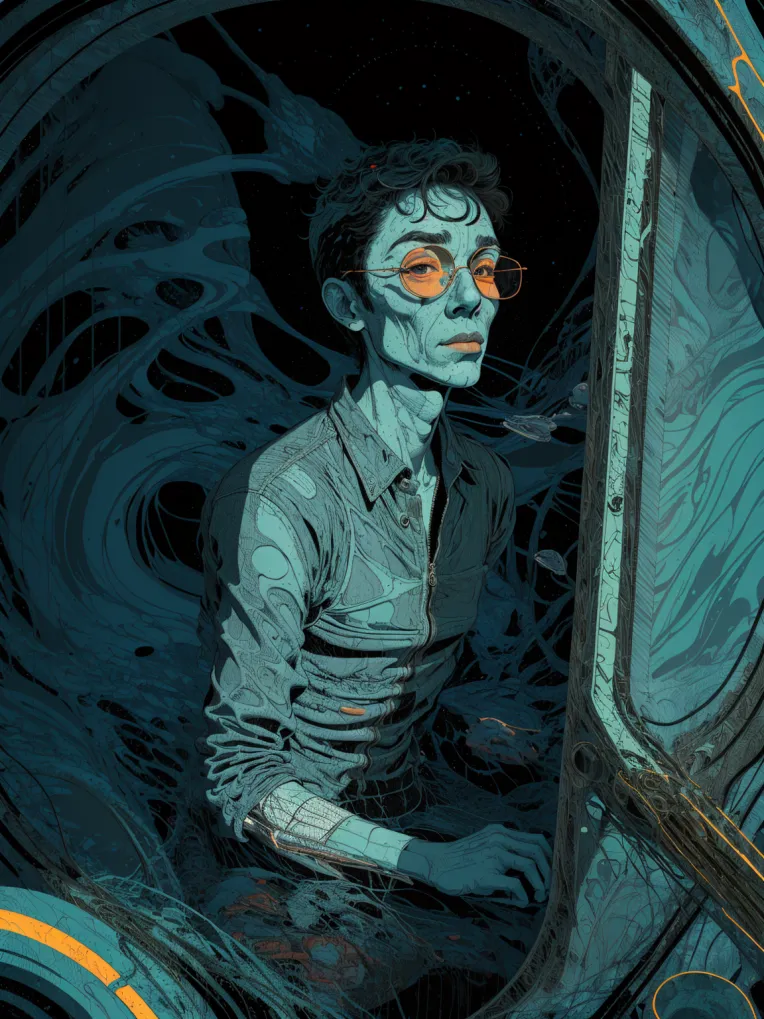 Image info
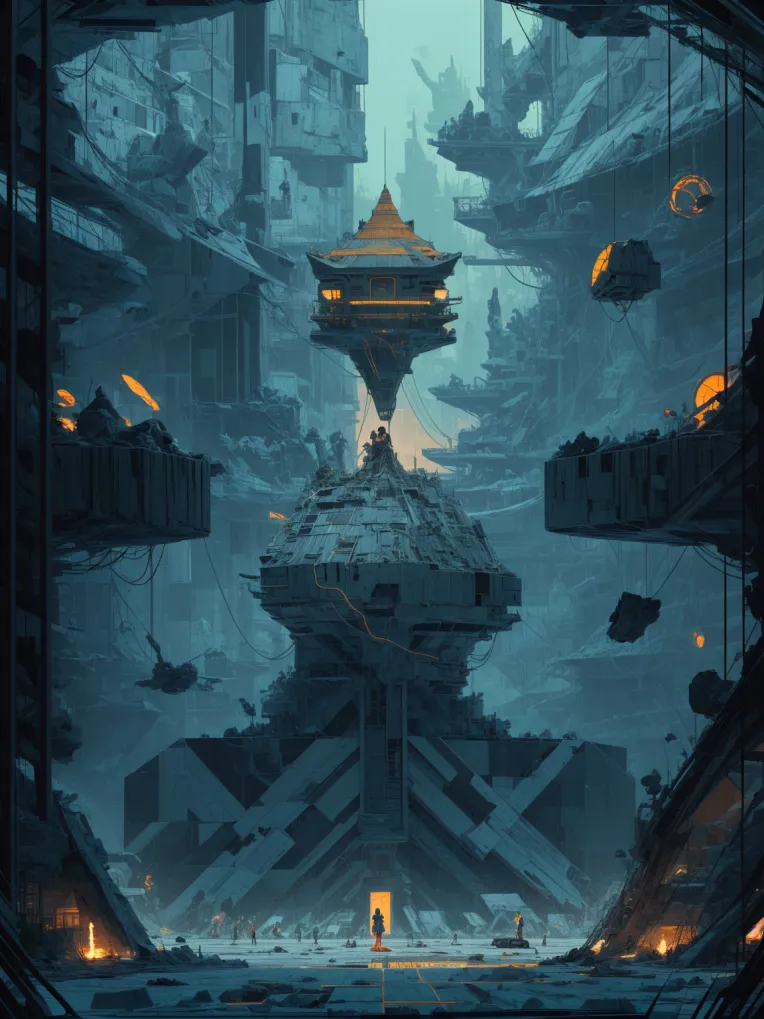 Image info
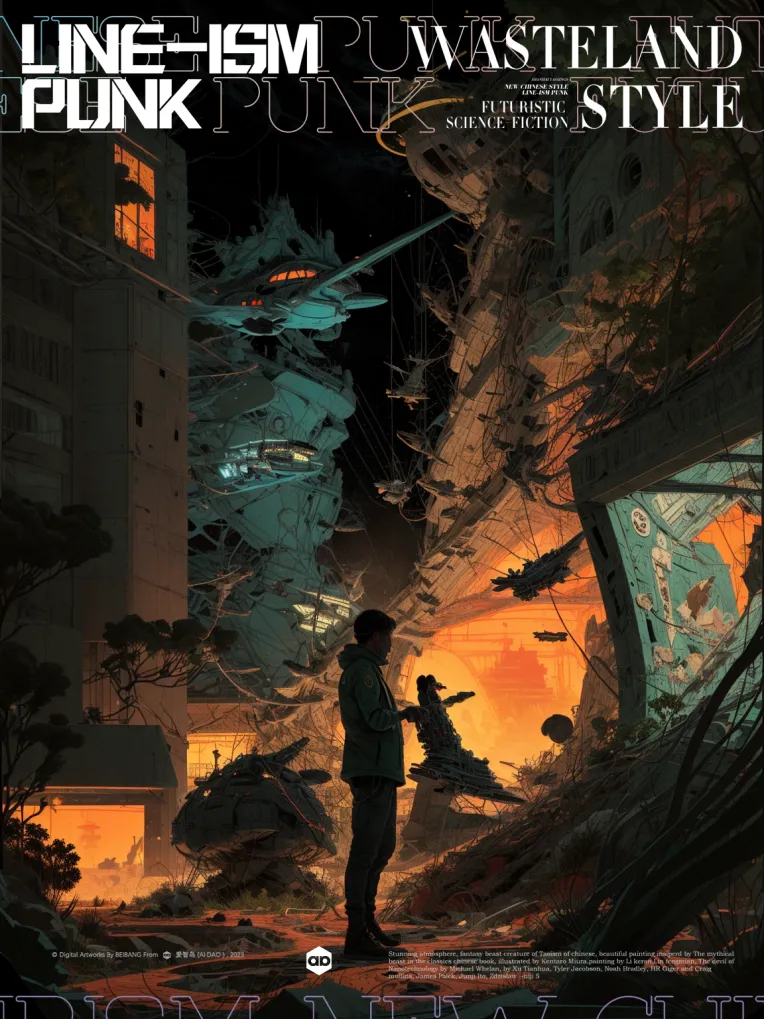 Image info
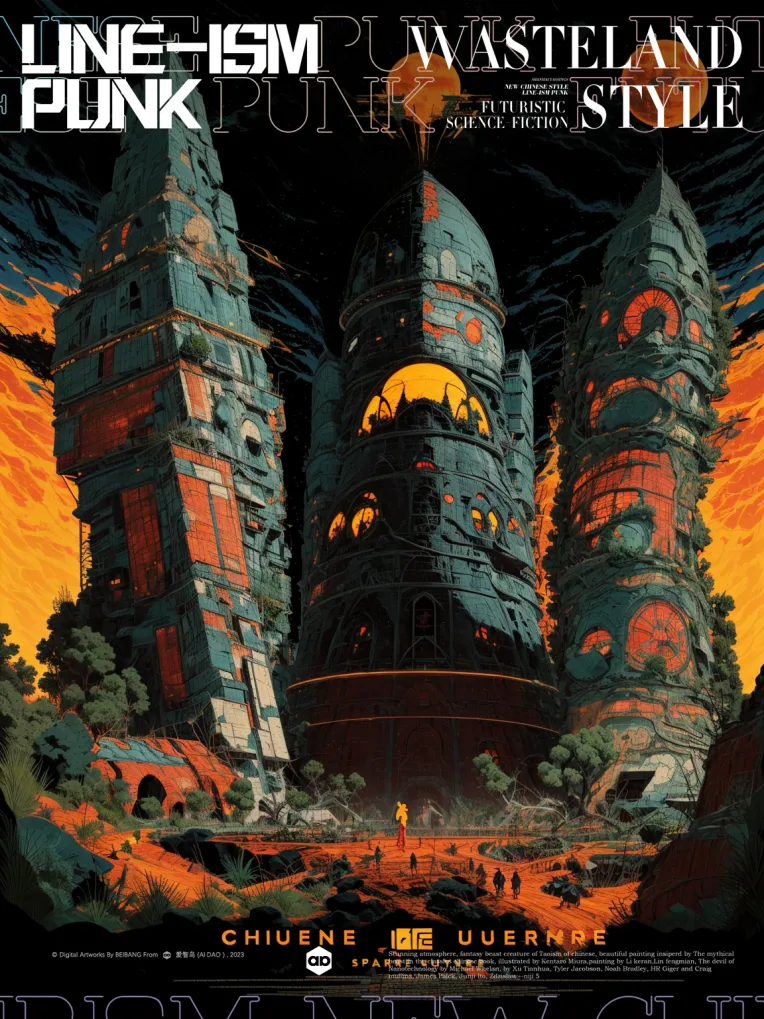 Image info
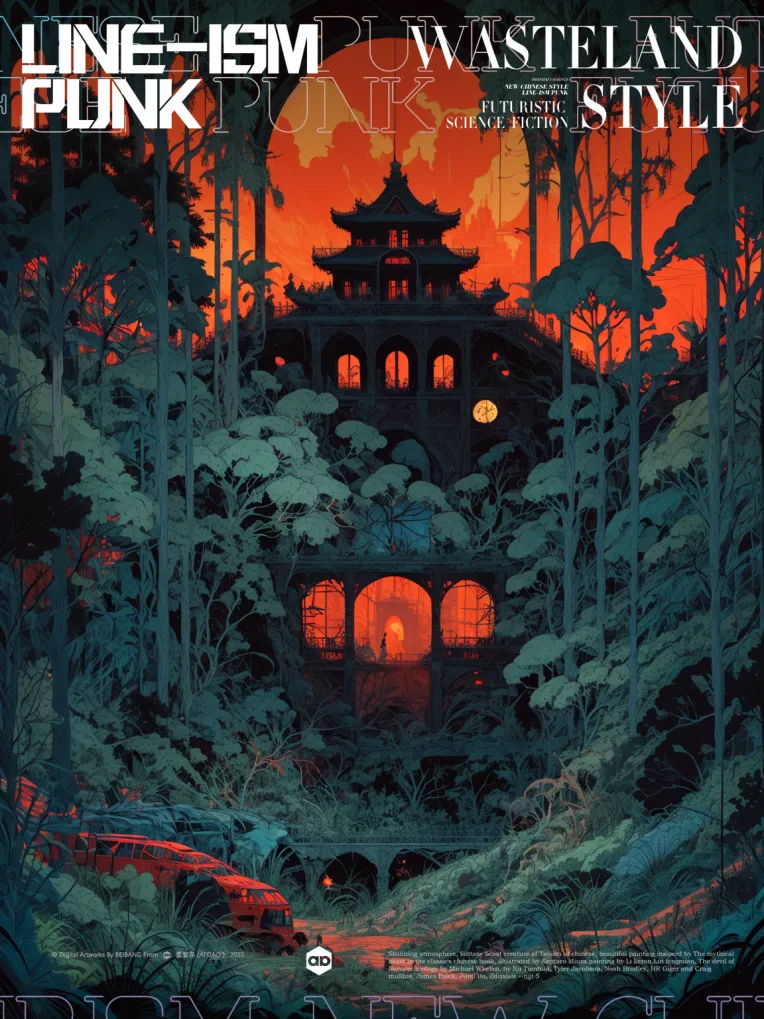 Image info
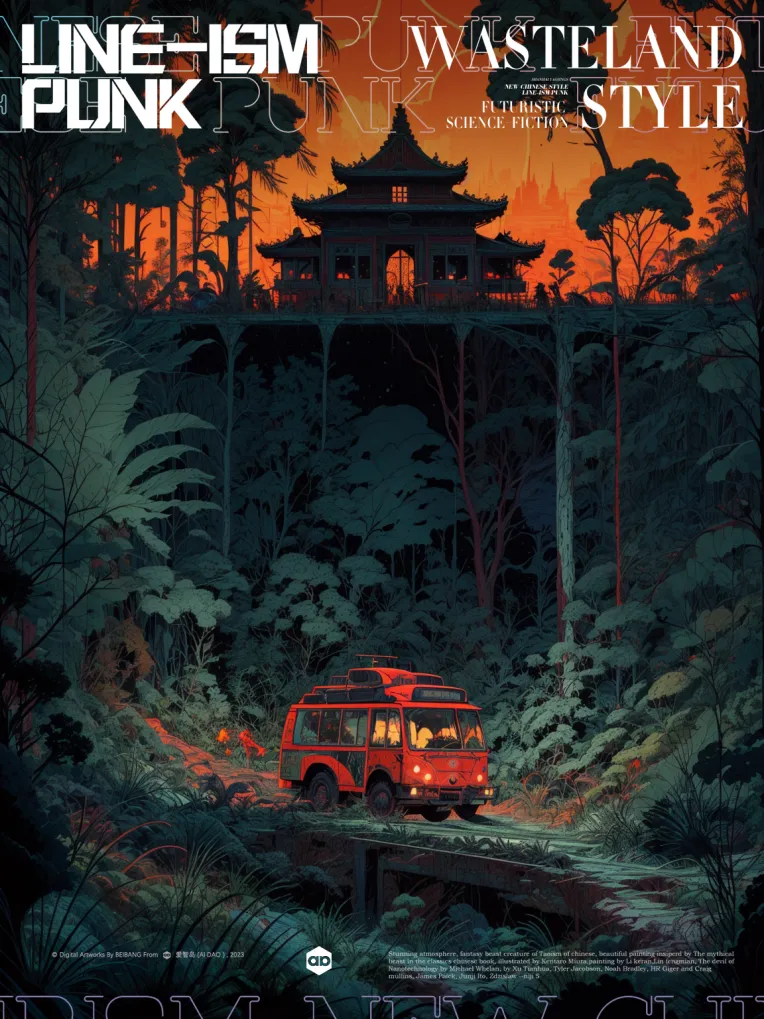 Image info
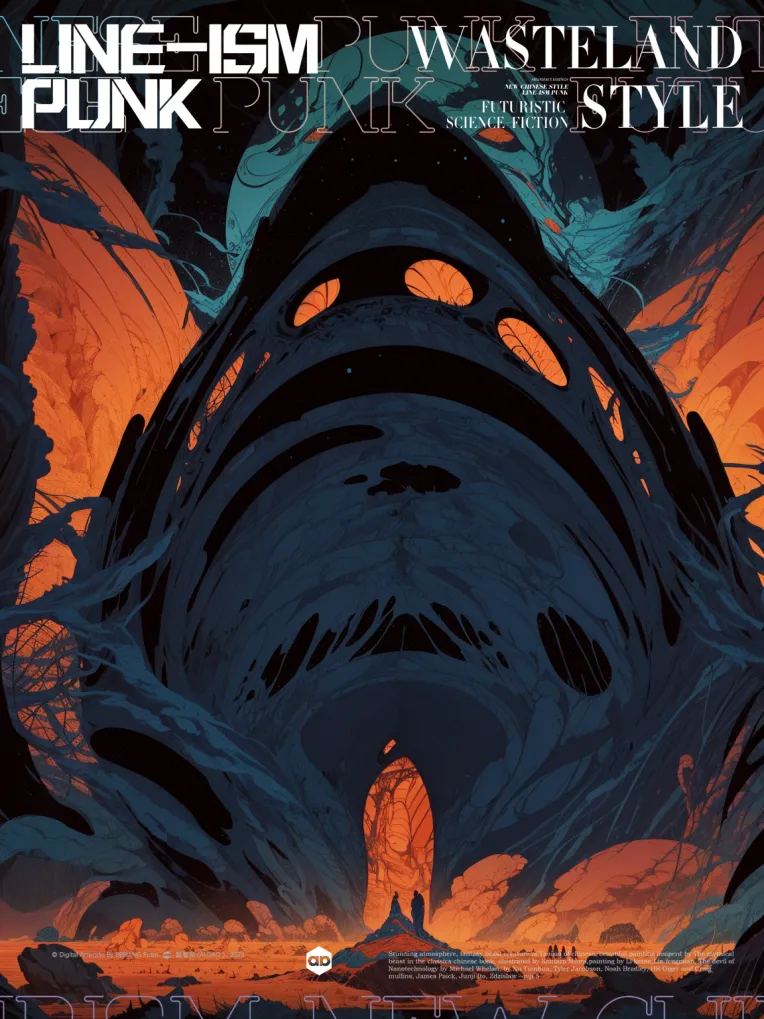 Image info
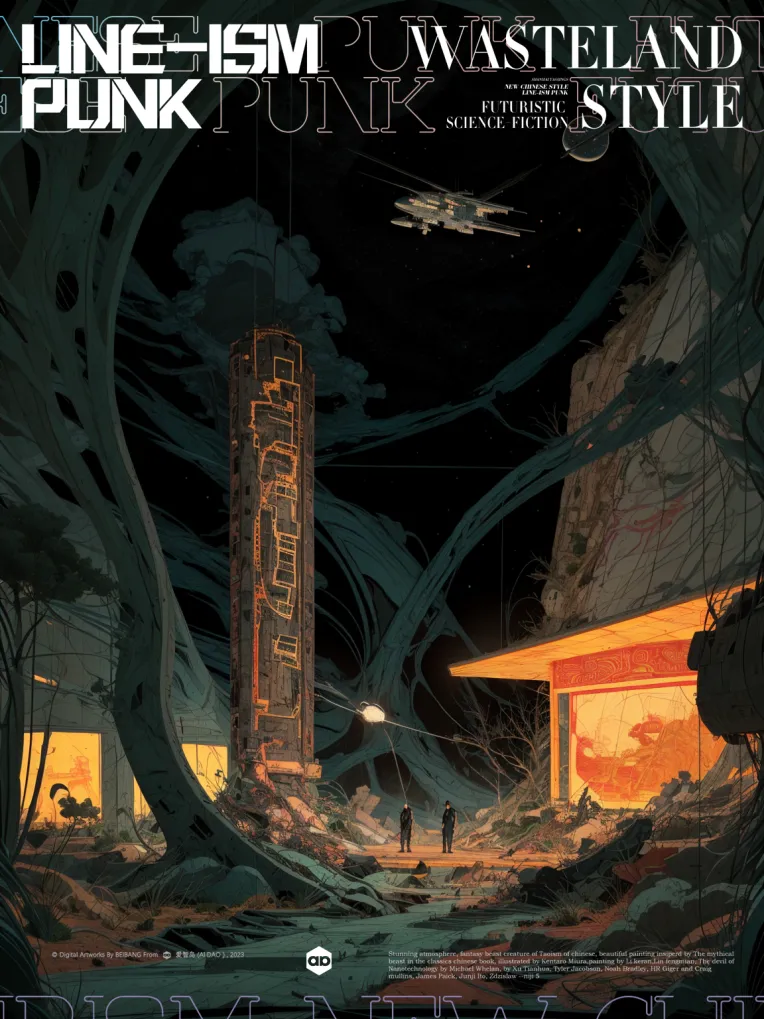 Image info
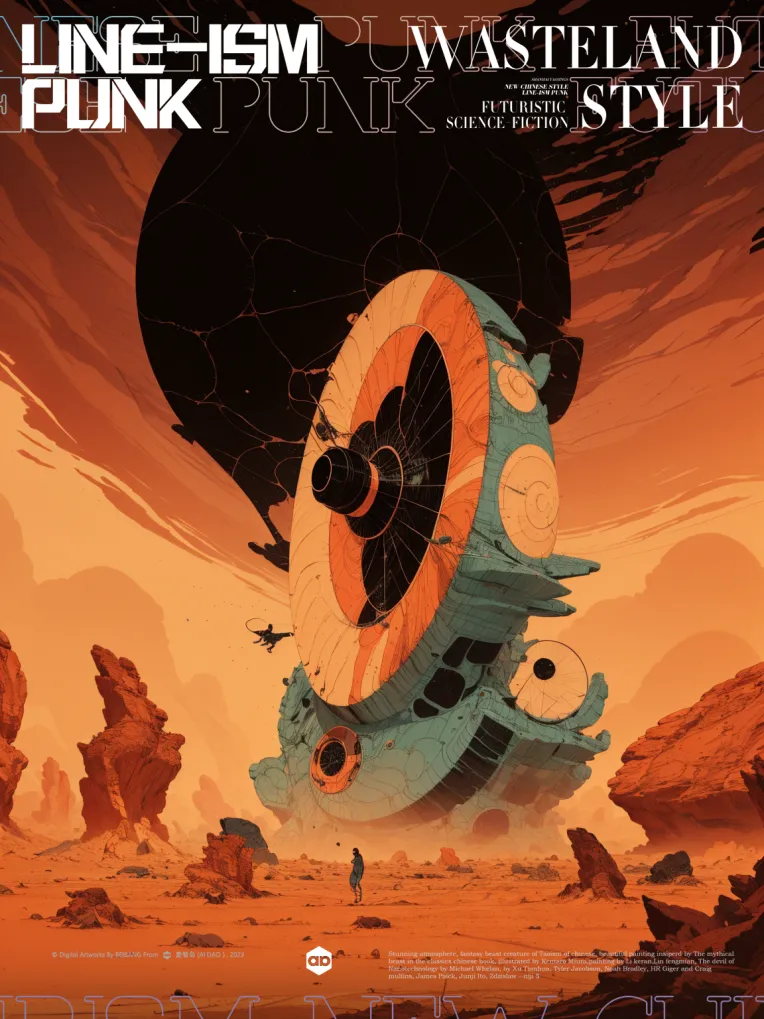 Image info
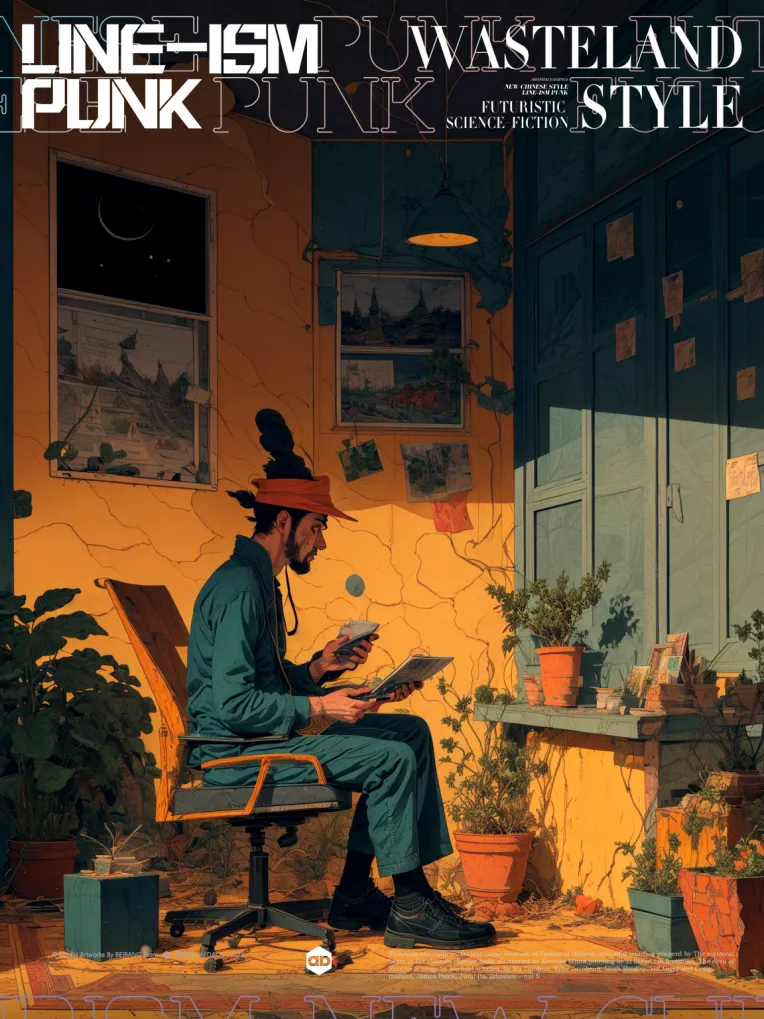 Image info
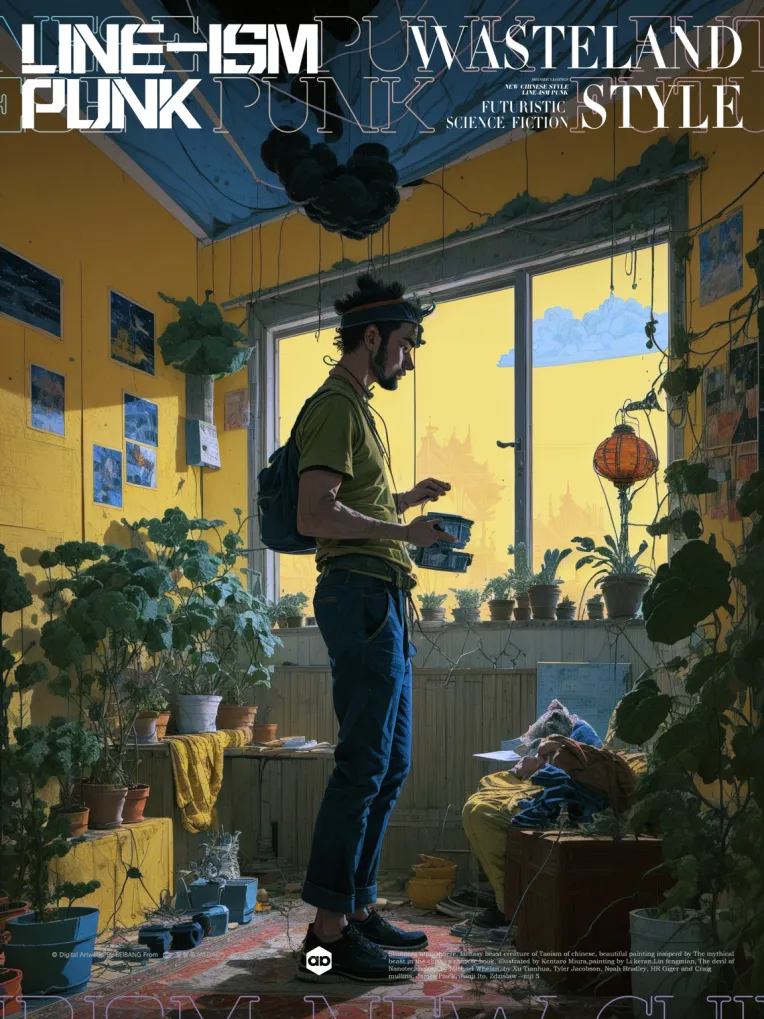 Image info
This style of line art is named Line Punk, seeking new breakthroughs in linear aesthetics. The dataset contains a large number of hard science fiction themes such as space ships, space bases, and other space architectural illustration materials with a wasteland style. The breakthrough in linear aesthetics lies in the sense of hierarch* ** **near narratives. Lines can pursue the precision and restraint required for storytelling, or appear messy and even a bit rebellious to express emotional tension. In short, this linear aesthetic belongs to a very modern style, used to represent a sense of futuristic science fiction.
The dataset consists of nearly 80% of illustrations by a single artist (Kilian Eng), mainly focusing on depicting science fiction stories and having a unique style. Although Kilian Eng is a non-Chinese, I tried various Chinese-themed content, and the results were quite good, of course, this requires good generalization with the base models. In the future, I will also try to incorporate more modern Chinese style line art illustrations into the dataset to see if they can be fully understood and well integrated. If successful, it will be released as version 2.0.
Dataset: 39 images | Training steps: 19000 | Lora weight recommendation: 0.6-0.88 | Iterations: 35-50 (recommended 50) | CFG: 3-5 | Recommended samplers: Euler a or DDIM
Recommended base model: moonmix_fantasy20 (base model used for cover image)revAnimated_v122
It is recommended to enable high-definition restoration, I usually use 2x;
Trigger words:Kilian_Eng, illustrationn (optional), using trigger words at the beginning of prompts works best, combining with some Chinese-style prompts can enhance the charm:illustration, masterpiece, best quality, illustrationn, space, star, scenery, spacecraft, science fiction, starry sky, ruins,
It is recommended to combine some illustration-style lora for output, often resulting in unexpected gains.
It is not recommended for the auxiliary loralora weight to exceed 0.5, and the combined weight of the main and auxiliary models should preferably not exceed 1.2, usually ranging between 1-1.2 for optimal performance, depending on the performance of different base models. I have encountered cases where the total weight went up to 1.5 without crashing, so the range provided here is just a rough probability.
The combination of multiple dante-style outputs is a creative approach I personally like, not mandatory. It requires a considerable amount of personal experience in model blending to use this approach effectively. If you feel that this approach only makes your output more chaotic and meaningless, please discard it decisively.
Disclaimer:
- In principle, this model is only for educational purposes, please do not use it for commercial purposes.
- All content generated based on this model is the individual creative behavior of the user after independent judgment, please abide by relevant laws and regulations.
- Any intellectual property issues caused by using this model to generate content will be your responsibility to resolve.
- Without the written consent of the author, the services of this model must not be integrated into any third-party software or service, nor should the association between generated content and this service be disclosed to any third party in any direct or indirect, explicit or implied manner, and you shall be liable for any losses incurred to the author.
———————————————————————————————————————————
Further Reading:
The enormity of the universe is beyond human comprehension. The scales we are accustomed to measuring are so limited, whether it's the Kun or the Peng, they are both beings that transcend human norms. For example, in Zhuangzi's dream of the butterfly, there is a profound idea of all things transforming. Currently, topics such as digitalization and the metaverse often involve embodiment, indicating immersive experiences that can be sensed by our physical bodies. What we seek is precisely an embodied sensation without the physical body. How can we make those whimsical ideas and bizarre scenarios tangible?
With such questions in mind, I am always in confusion and hesitation. Are the seemingly inevitable conclusions or experiences really reliable? Have I been unknowingly confined to my own comfort zone? Is AIGC really just a productivity tool? If a tool is a potential invention idea, shouldn't the first thing invented before many great new things be an entirely new tool? The process of humans constantly inventing tools is the process of their own development. From data to information to knowledge, and then to invoking AI with virtual personalities, the meaningful aggregation of data forms information, and the process of information flow and regeneration is the model of knowledge. The next step is how to collaborate across modalities based on a stable and self-consistent logic, which is similar to our personification. Personification is undoubtedly an ongoing dynamic and self-consistent process, and it seems that alchemists continuously slice their personifications into data. Is this also a process of self-replication and evolution?
There are many questions, and figuring them out requires continuous contemplation. Water does not rot when flowing, and thoughts do not cease when pondered. Let's talk further about my work, named Oriental Kunpeng.
Western aesthetics excel in depicting entities by mastering physical laws such as light and shadow, three-dimensional perspective, and texture, combined with the internal operating laws of our human functions such as neuroscience and psychology to shape embodied experiences. This approach has undoubtedly been successful. Thus, to achieve a captivating visual and auditory experience, we must learn the refined aesthetic of embodiment that the West excels at (which I also refer to as sensual). Hollywood's narrative aesthetics are based on this physical and sensory-rich visual and auditory aesthetic. In contrast, Eastern aesthetics are quite the opposite. We strive to discard the constraints of the physical body, allowing imagination to take flight. Only when the realm of thought is broadened can we see the various realms of life. These layers of multiple realms are distributed within a magnified and self-contained celestial-human realm. So, how do we unfold the wings of imagination for whimsical ideas? This is the native skill that we, Easterners, excel at. The so-called metaverse we often talk about is akin to ancient sages dwelling in the mountains with dim lights and withered ink, wandering in parallel universes filled with transformations such as "Strange Tales from a Chinese Studio," "Journey to the West," and "Classic of Mountains and Seas," right?
In recent years, I have been revisiting Chinese ancient cultural classics, mainly focused on Confucianism and Taoism with sporadic involvement in Buddhism, occasionally delving into Zen. I have read Laozi's work the most, having read several versions of the "Tao Te Ching" and "Zhuangzi," with a deep admiration, especially for Zhuangzi's "Free and Easy Wandering." Its grandeur, depth of questions, and metaphorical brilliance are truly striking. Exploring the essence and charm, transforming endlessly, akin to "Classic of Mountains and Seas," as simple as "Book of Songs," as spiritually dynamic as "Free and Easy Wandering"...
Furthermore, I have been continuously studying the art of AI alchemy, attempting to assist in portraying the grandeur and subtlety of this exquisite metaphor. Naturally, this task is arduous but certainly valuable. It is worth further investigation and refinement. I finally finished reading the book "Why Greatness Cannot Be Planned" last week and suddenly understood many previously inexplicable aspects of my early life. It turns out I was simply seeking enough "stepping stones," many seemingly useless items often prove to be valuable in the future, and many unintentionally planted willows often grow into deep-rooted shade. The author is a senior AI expert who, along with colleagues, developed an experimental website similar to image genetics, where anyone can freely evolve others' generated images based on personal preferences (I haven't verified this, but it should be the website artbreeder.com, which I was really addicted to playing with last year). It is intended to experiment with a self-evolving algorithm that is aimless and unplanned.
The past to the present undoubtedly follows a path, but the present to the future does not follow a linear path. The transition between the present and the future is not a straight line, but intricate and chaotic. Since encountering AIGC in April last year, I believe my cognition has undergone significant changes. Constant openness, lack of preconception, and continuous learning have become my new motto. The experimentation field will forever lack one piece, so with the help of two other partners, we created Aizhijima. Talking about the future in the so-called AI's year is pale because the uncertainty exceeds our imagination. The only thing we can do is accumulate enough stepping stones. The best use of stepping stones is to construct them into a public arena, allowing people with different cognitions and needs to take them for their next steps, which can be seen as a reading practice after finishing "Why Greatness Cannot Be Planned."
———————————————————————————————————————————
Alchemists:
"Alchemy for AIGC creators is akin to constructing a path to the heavens for all ordinary individuals, just like the golden road to heaven seen in "Jiang Ziya." Or we can call it [The Path of Mortals Cultivating Immortality], which is also feasible."
In ecosystems like AIGC creations such as Midjourney, severe homogenization has already emerged. This issue will surely continue to evolve, further ferment, and by then, homogenization will be a major problem that most AIGC creators cannot surpass. In light of this, I believe profound originality will inevitably emerge in the AIGC field. Personal traits will merge with AI, choosing what kind of aesthetics, selecting how to evolve this aesthetics, we've all heard of self-trained models, a vivid description in the industry is calling it alchemy. Many individual differences will be further internalized due to AI empowerment, one alchemy, one world, this is the deep originality of AIGC, which no one else can recreate. Because it is separated by thousands of differential choices, large models, small models, plugins, prompts, knowledge structures, thematic accumulation, aesthetic preferences...