Zhejiang Intangible Cultural Heritage IP Image Blind Box Design
V1
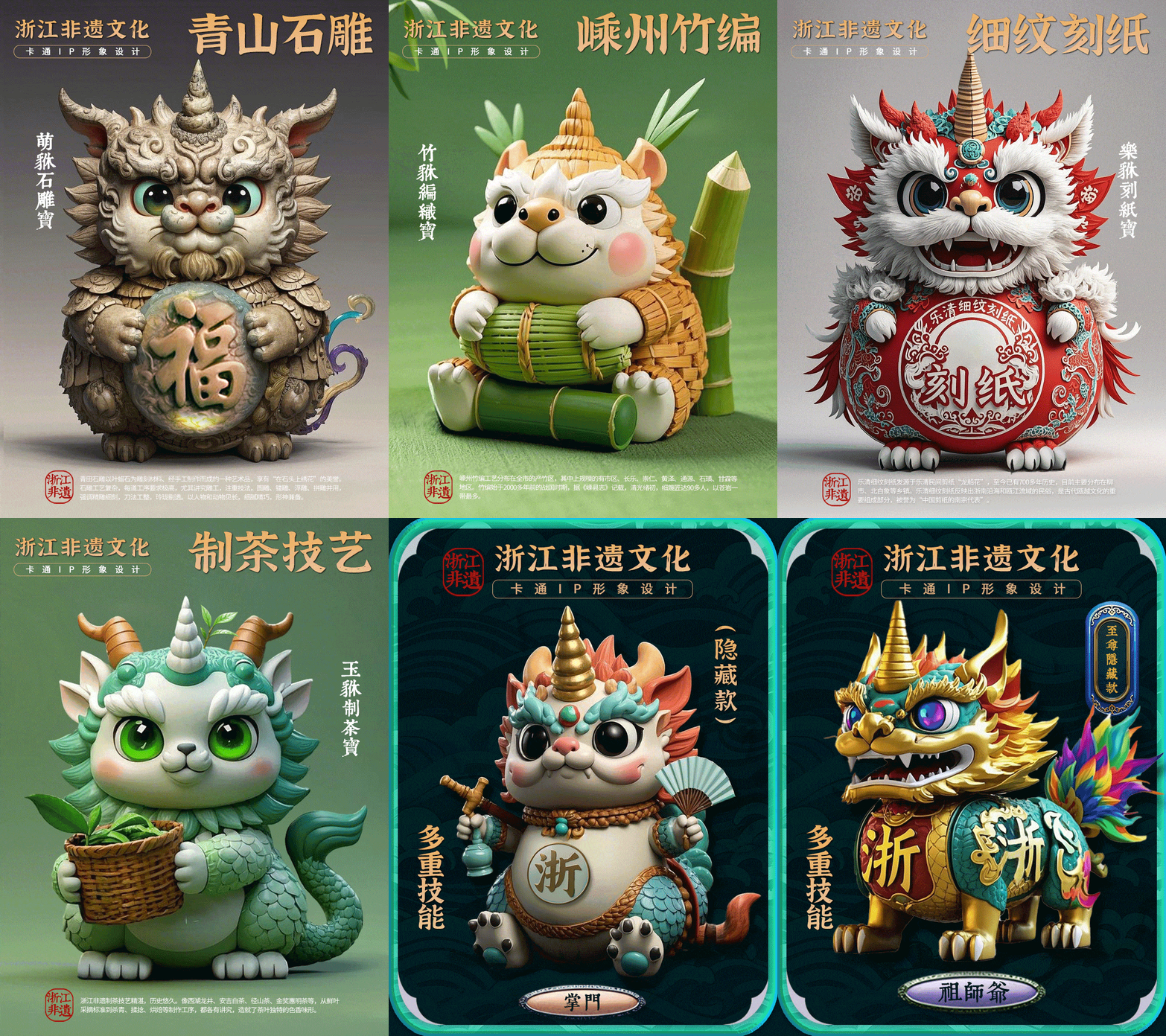
 Image info
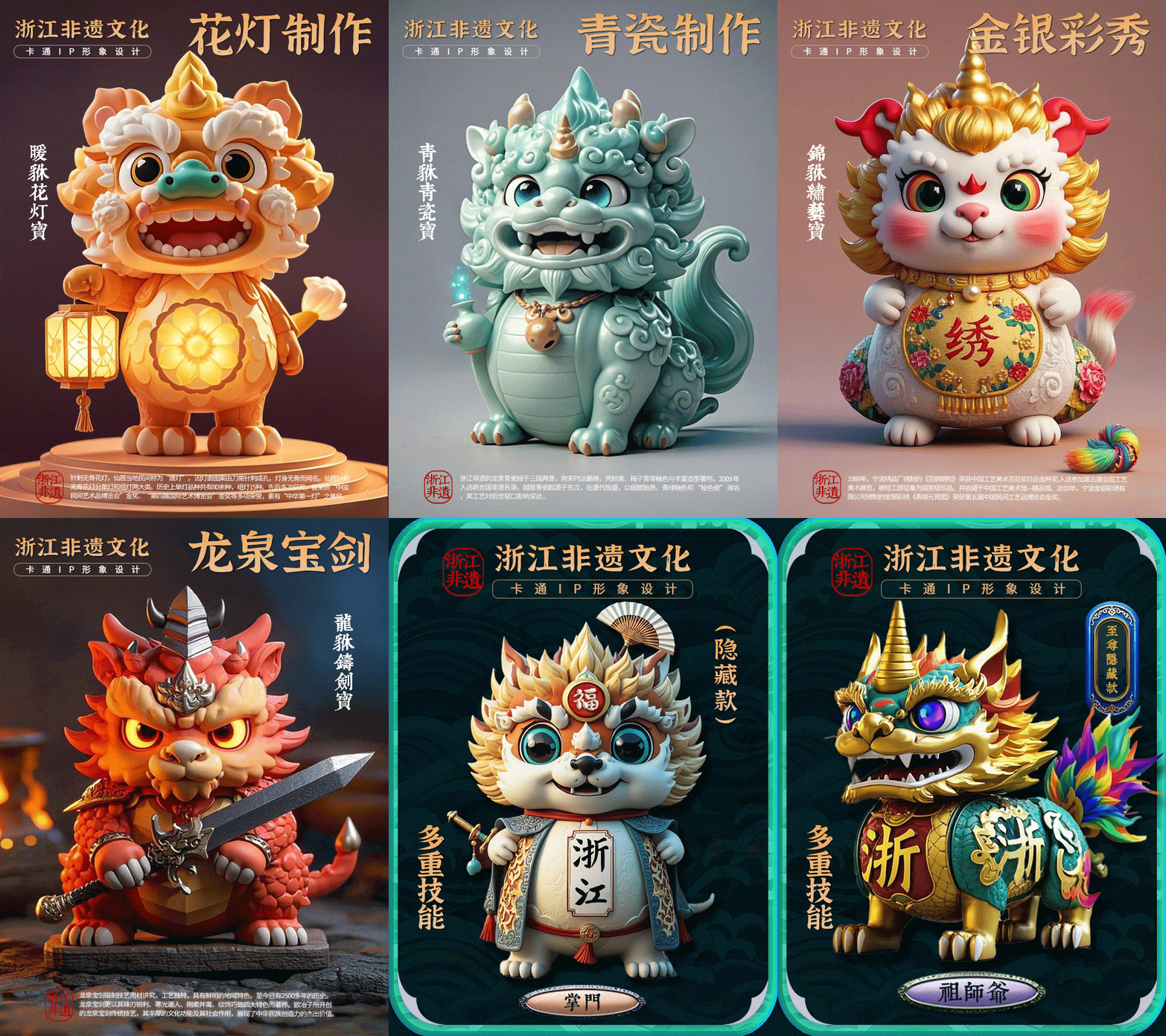 Image info
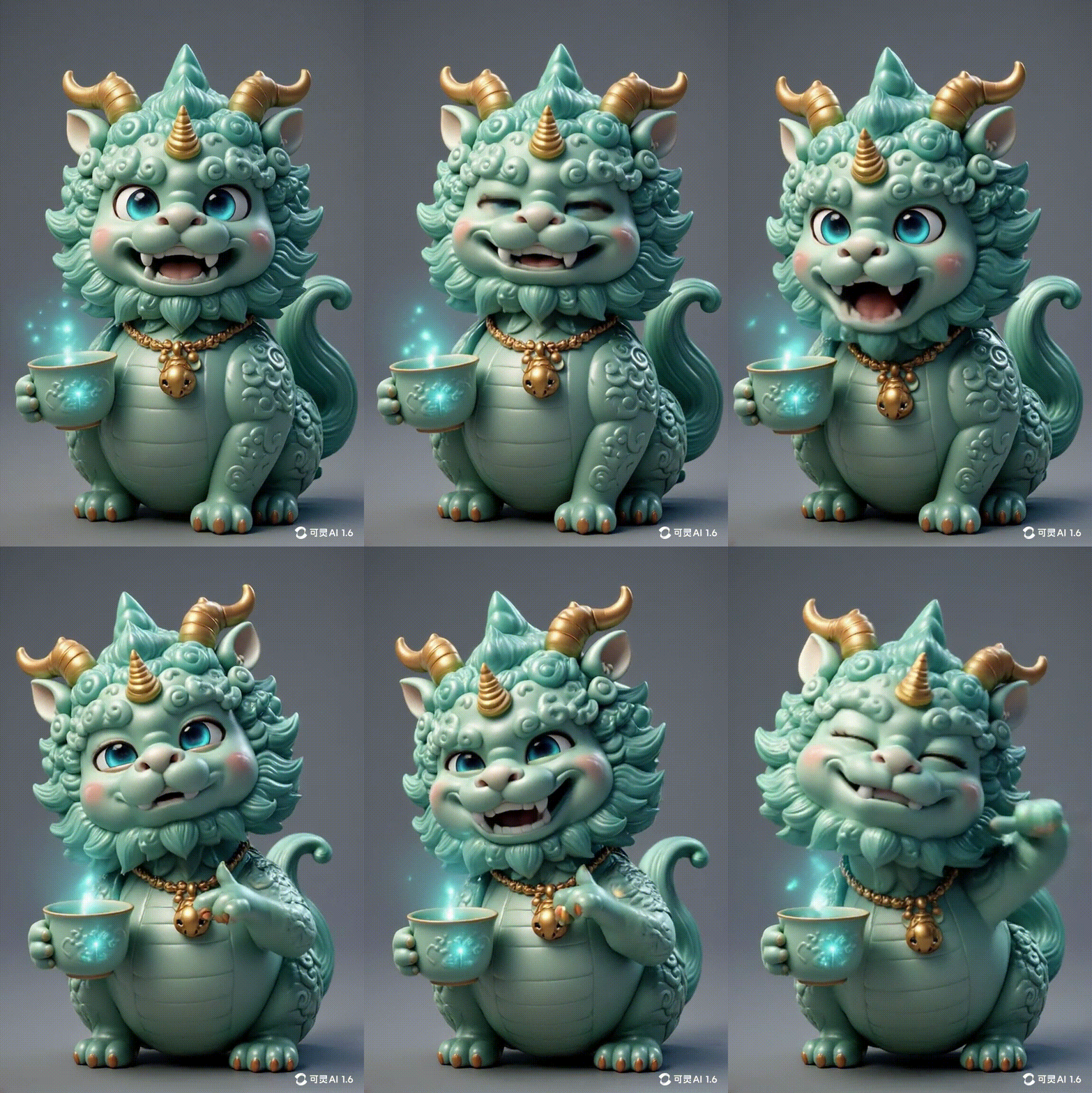 Image info
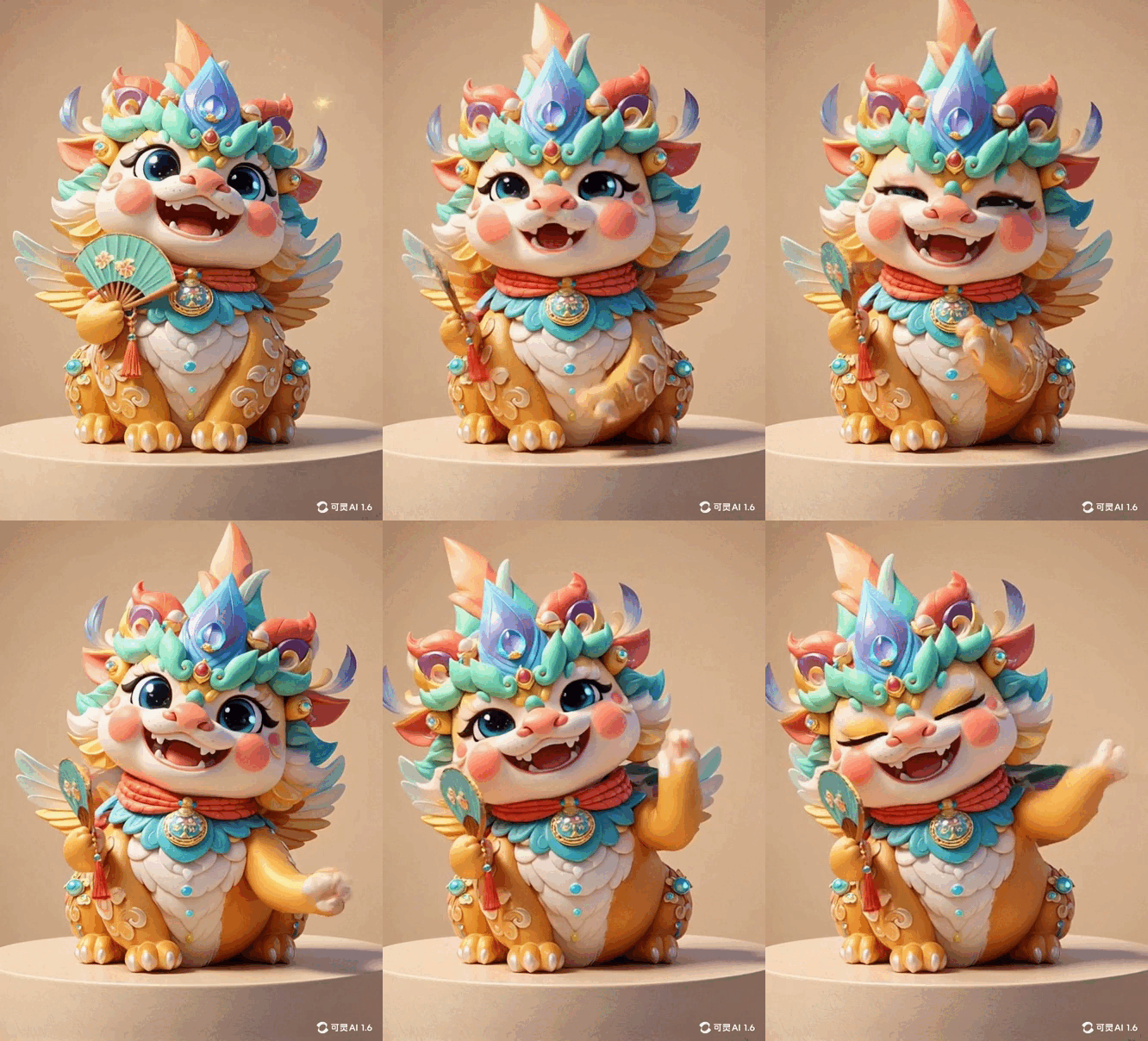 Image info
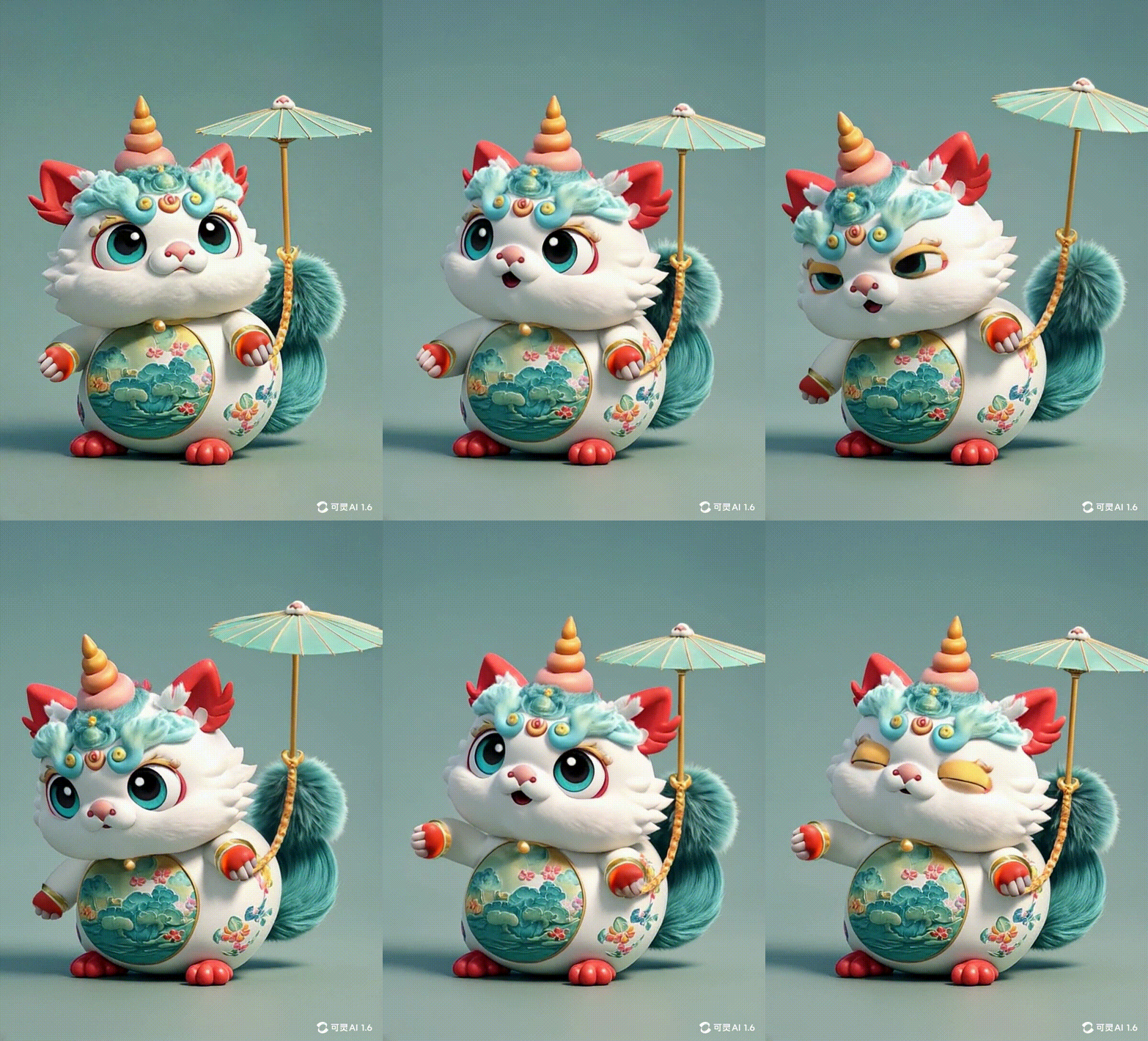 Image info
 Image info
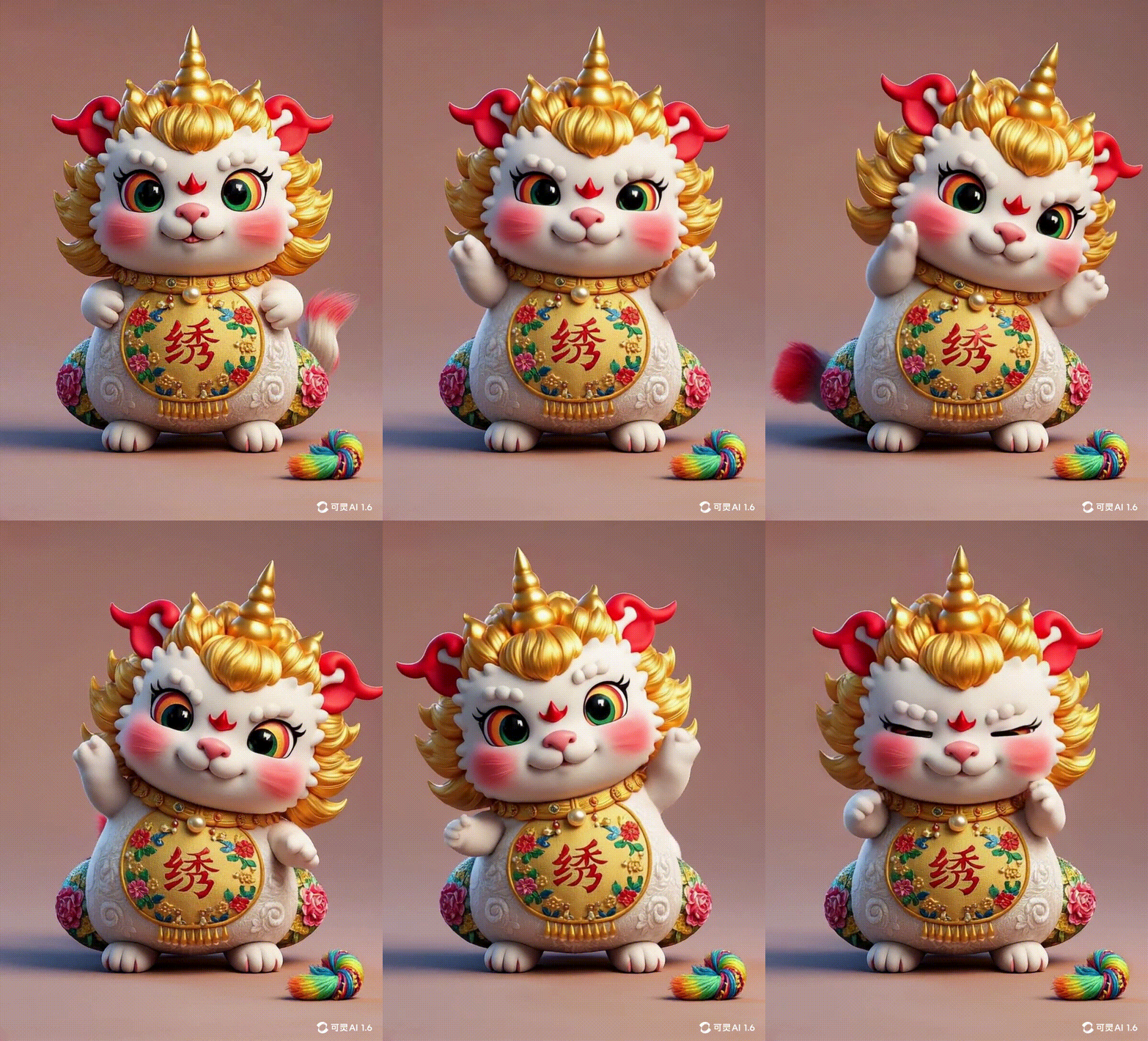 Image info
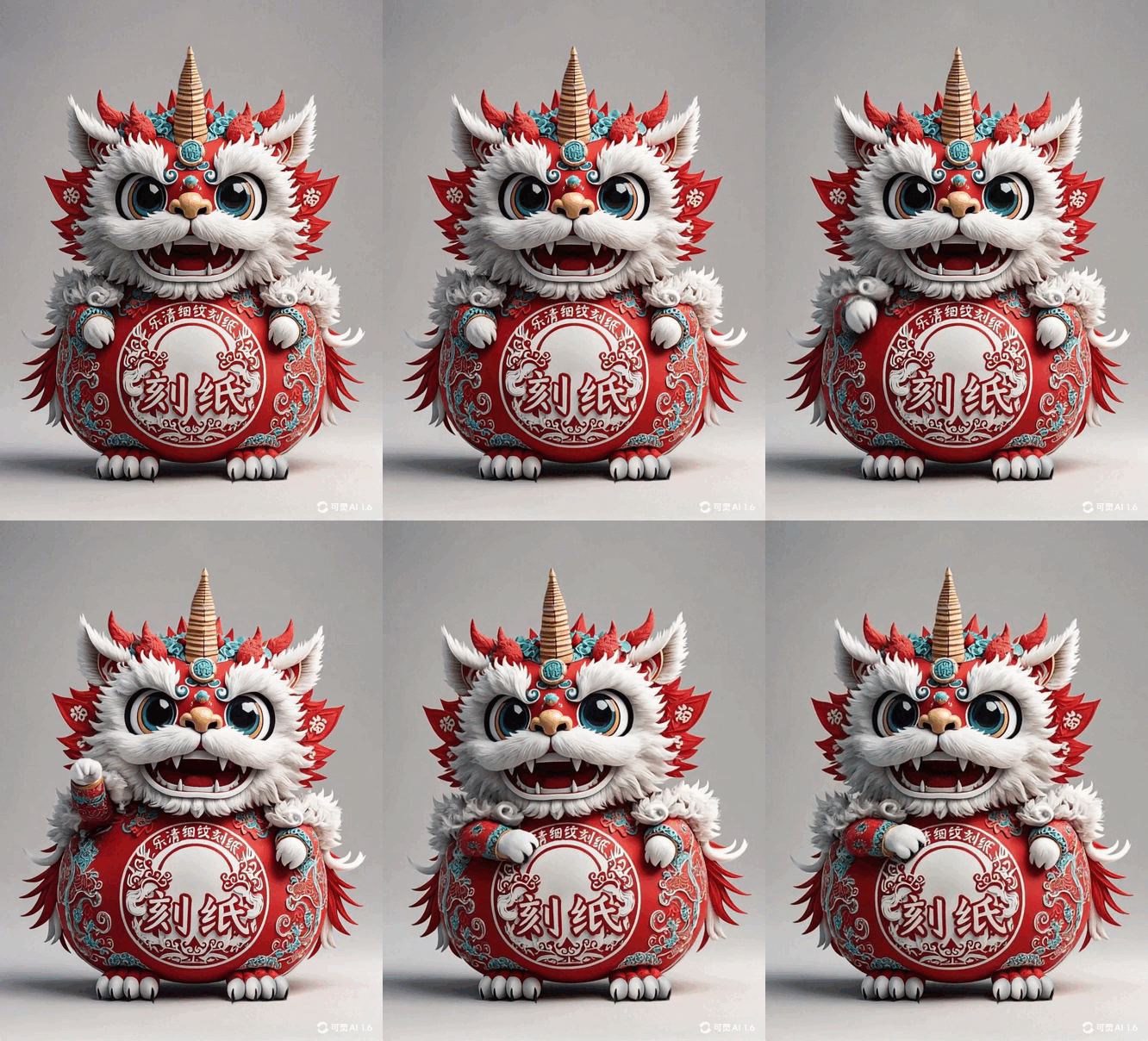 Image info
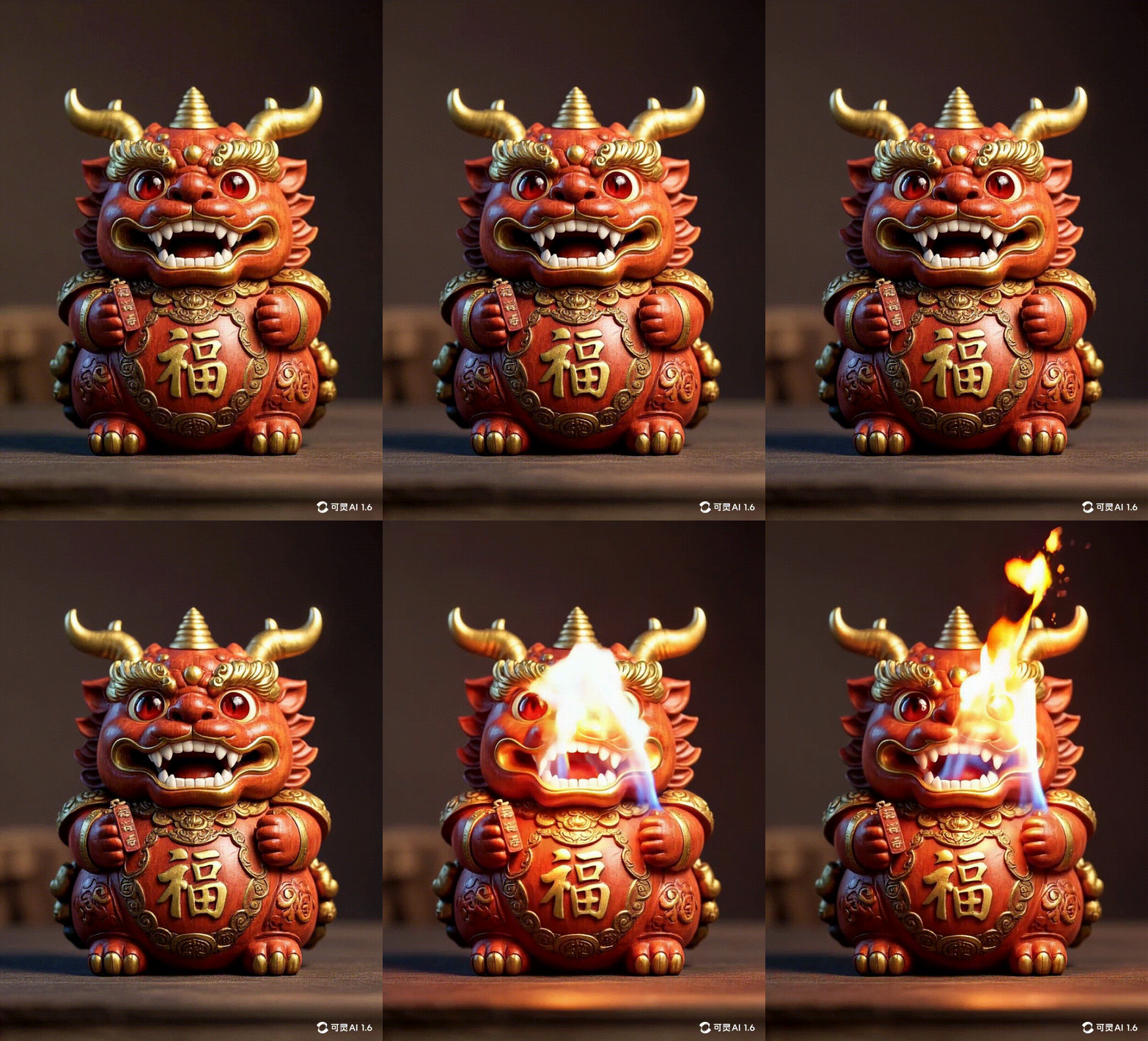 Image info
 Image info
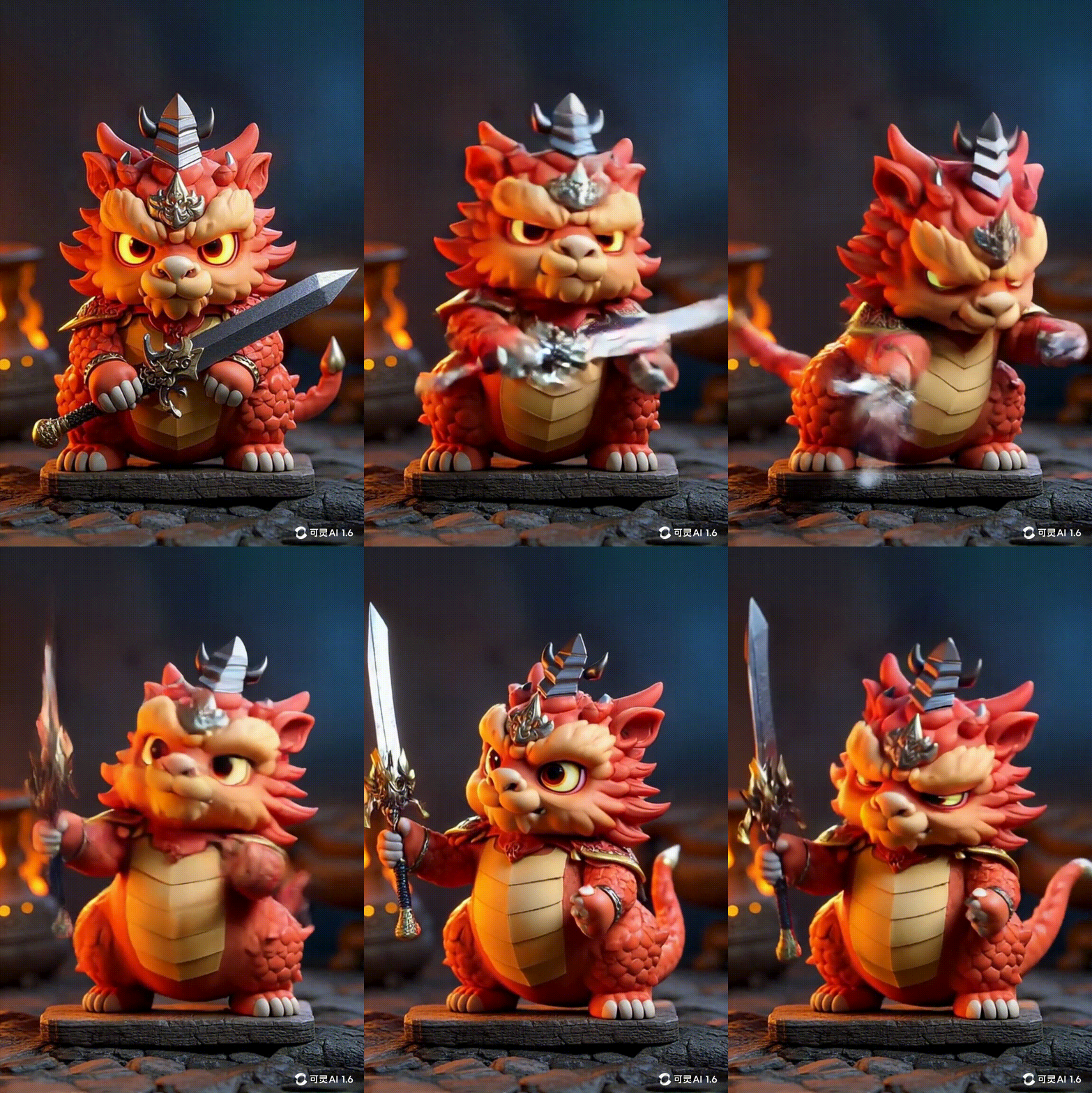 Image info
 Image info
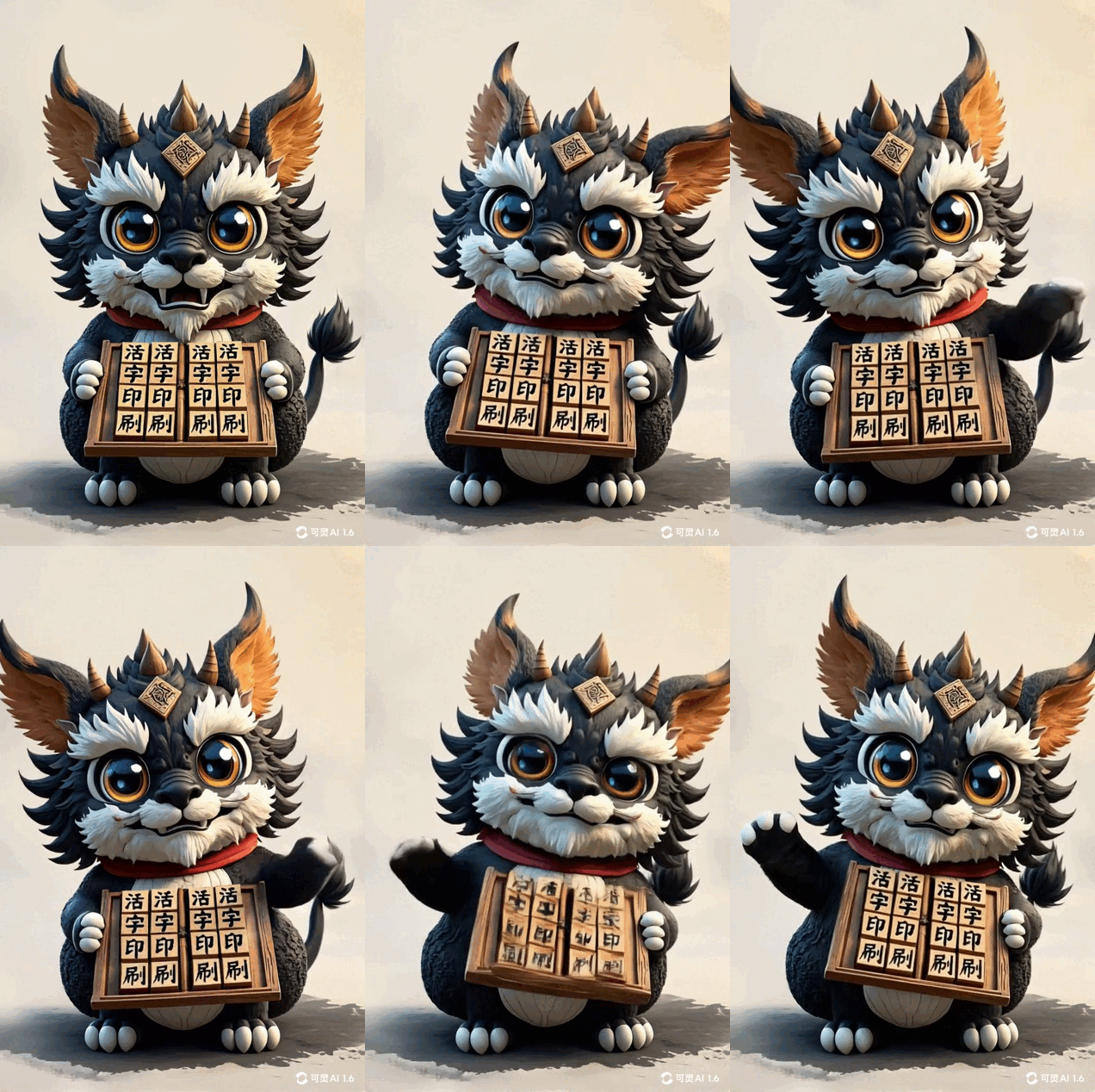 Image info
 Image info
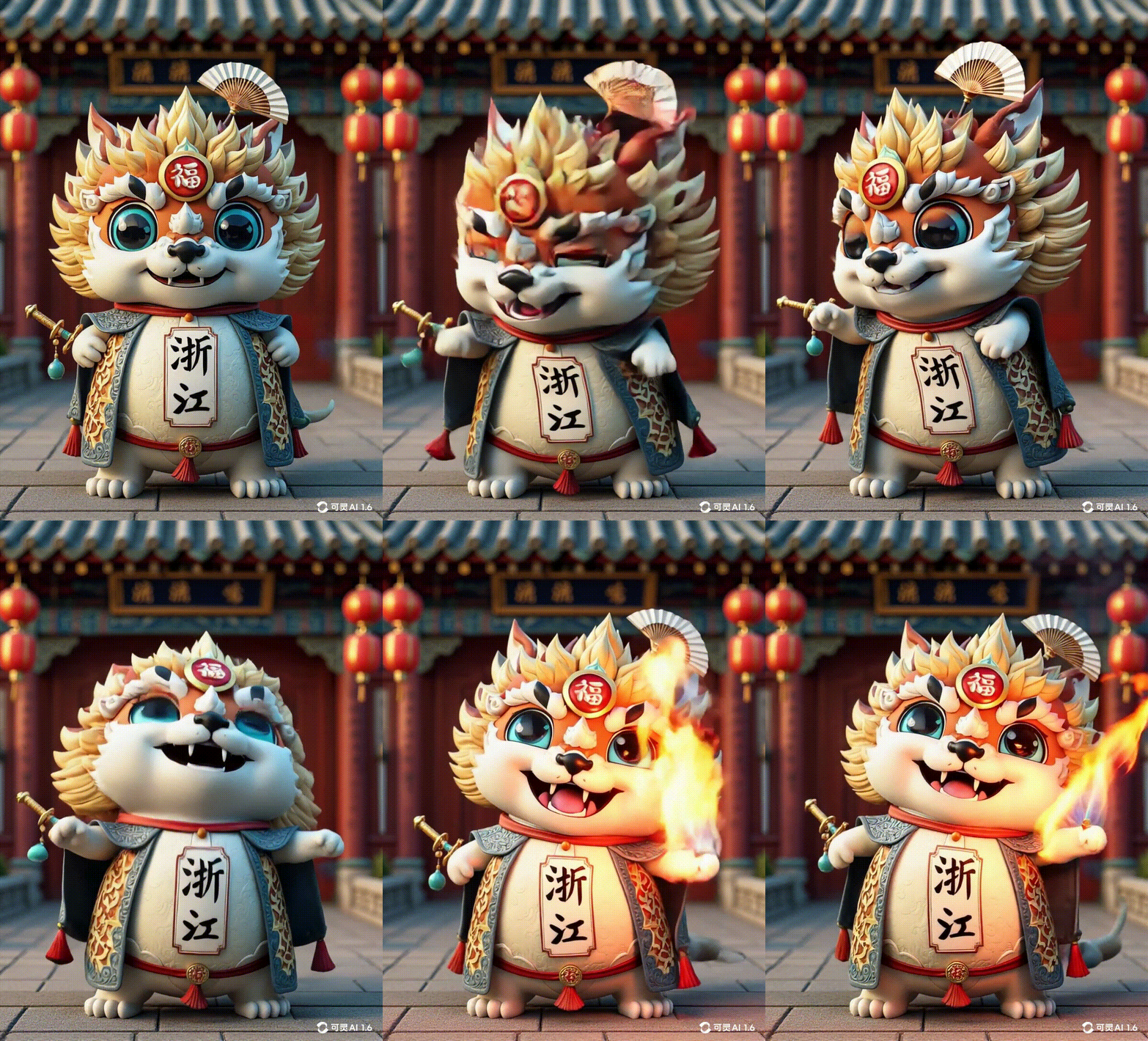 Image info
 Image info
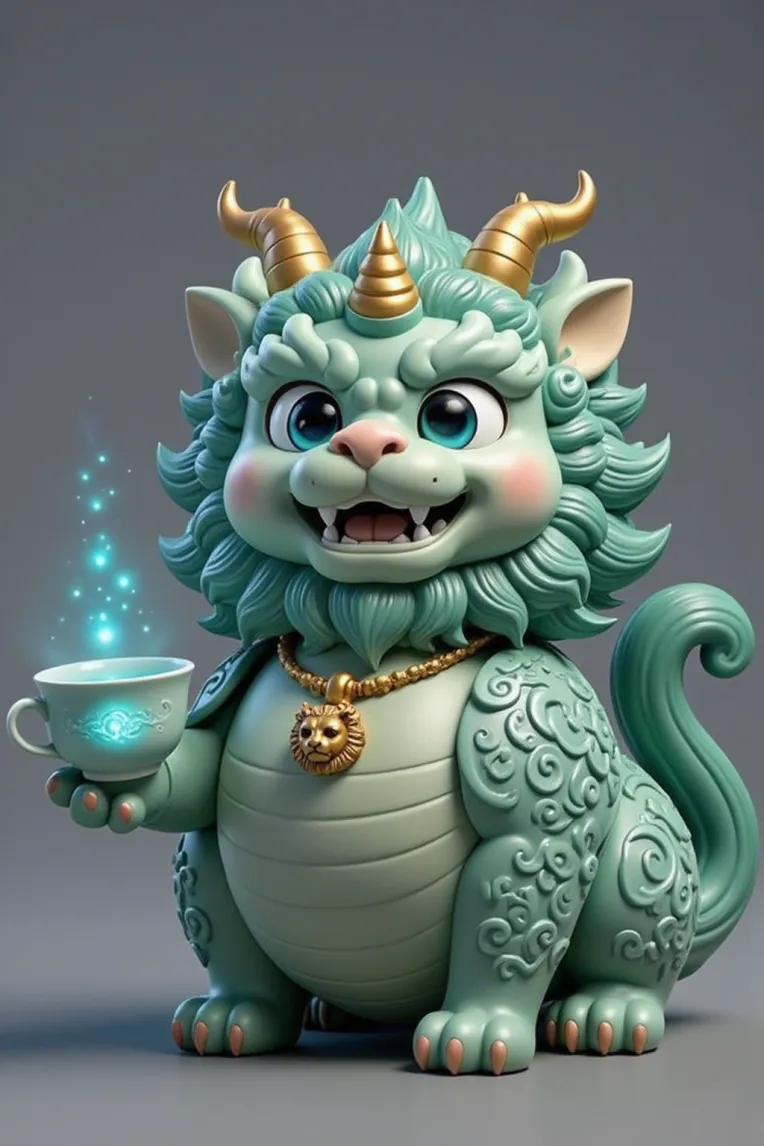 Image info
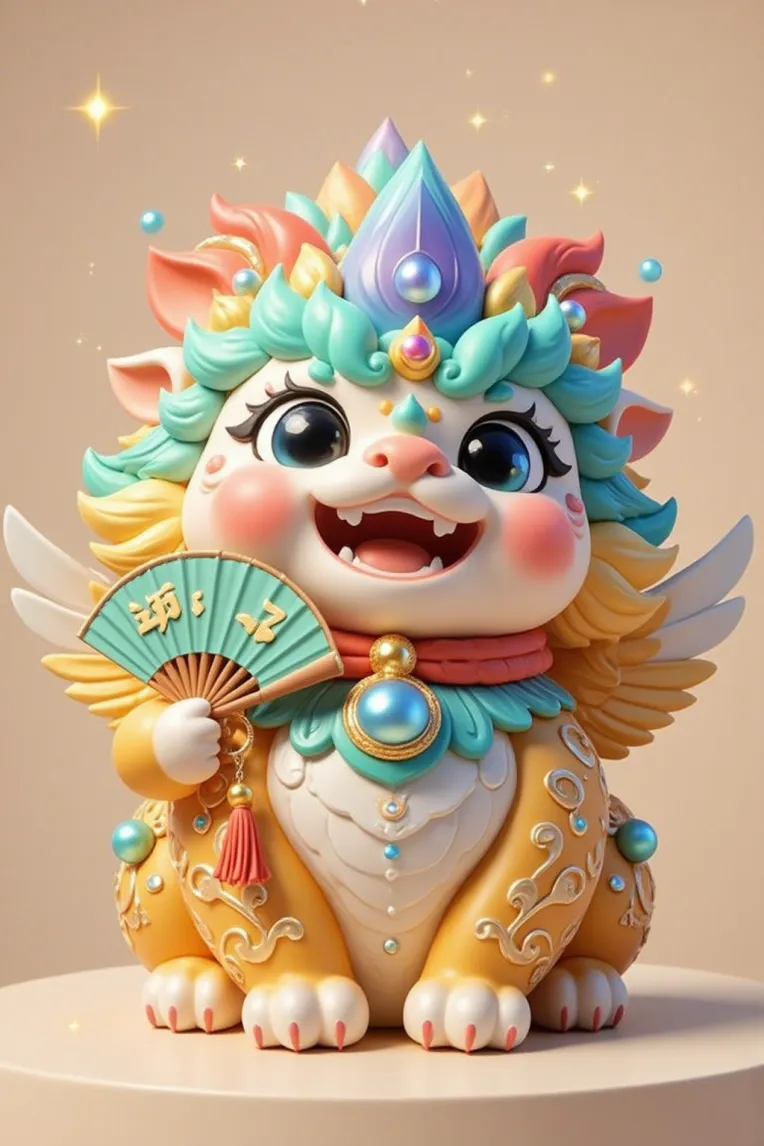 Image info
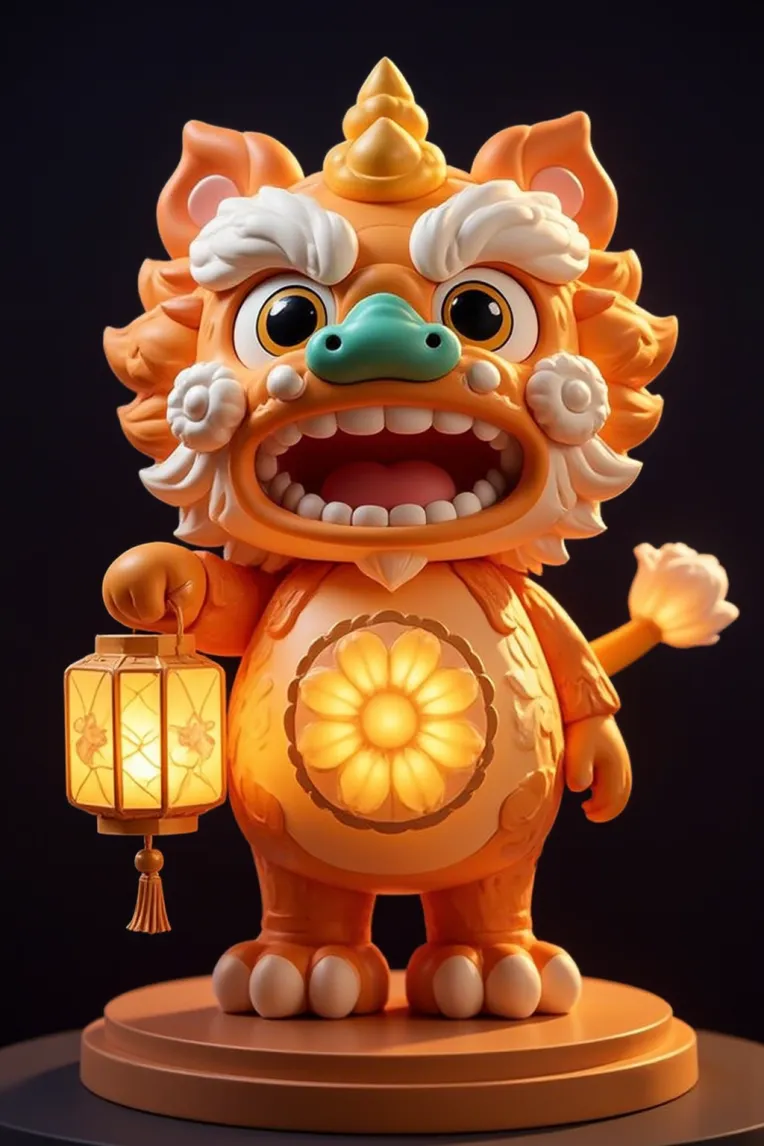 Image info
This model has won the First Prize of the "Zhejiang Intangible Cultural Heritage - Best Intangible Cultural Heritage Inheritance Award".
"Design Description of PI Xiu IP Image Blind Box of Zhejiang Intangible Cultural Heritage, China"
Dear audience:
I. Introduction
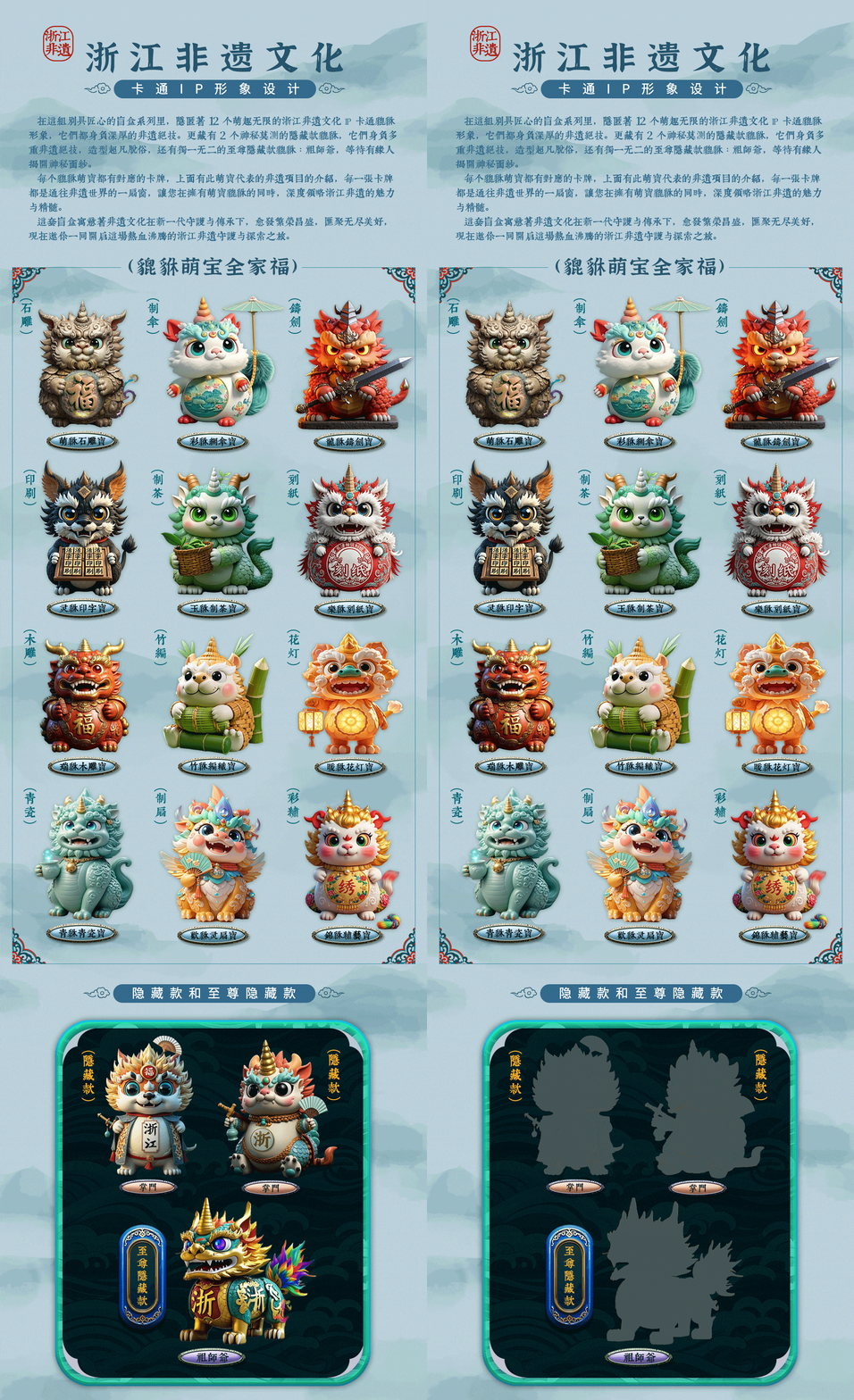
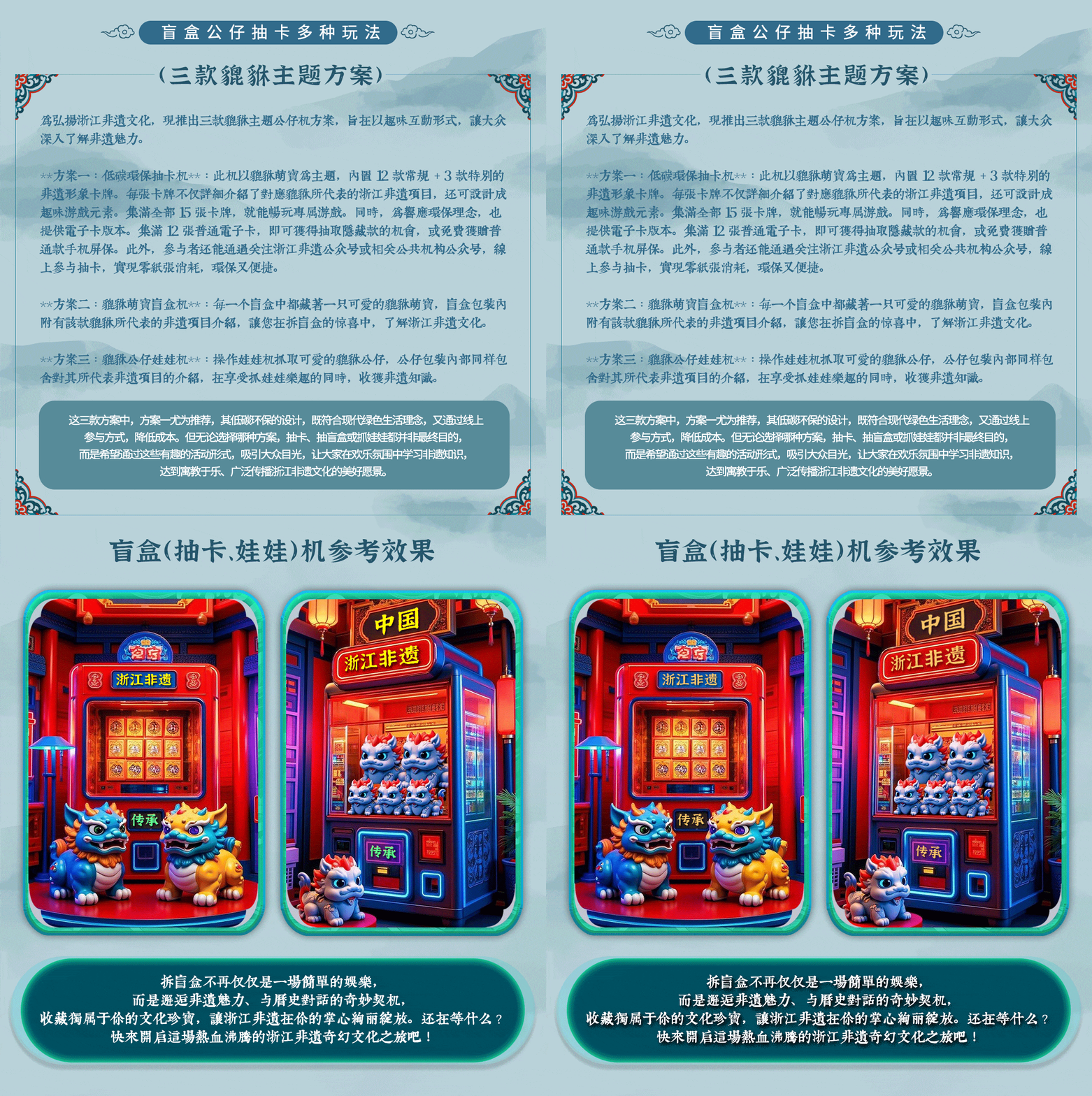
This model, "China Zhejiang Intangible Cultural Heritage: IP Image Blind Box Design", aims to combine Zhejiang's rich intangible cultural heritage with the popular blind box model through innovative design forms. It uses cute cartoon blind box images as the carrier to arouse the public's strong interest in Zhejiang's intangible cultural heritage, thereby promoting the dissemination and inheritance of intangible cultural heritage.
Ii. The Reasons for designing PI Xiu as a cartoon image of Zhejiang Intangible Cultural Heritage
1. Profound historical and cultural heritage
Introduction to the Divine Beast: PI Xiu, also known as "Bi Xie" or "Tian Lu", is a auspicious beast in ancient Chinese mythology and legends. It is regarded by the common people as a beast that brings good fortune and wealth. With a large and round belly, it only takes in but never out, symbolizing the absorption of wealth and the gathering of good fortune. It often appears in front of shops, signifying prosperous business and abundant wealth, bringing people good luck and the hope of prosperity. Its image can be traced back to the Shang and Zhou dynasties. In the stone and jade carvings of the Han Dynasty, it symbolizes protection and warding off evil spirits. During the Tang and Song dynasties, the PI Xiu culture incorporated more auspicious meanings and was widely used in architectural decoration, clothing patterns and other aspects, carrying people's yearning for a better life.
2. Unique implications and cultural protection
The PI Xiu has a mouth but no anus, capable of swallowing all things without spitting them out. This unique feature makes it a symbol of absorption and protection. It has a special significance in the current cultural environment. In the past, some countries such as South Korea had the bad behavior of stealing China's intangible cultural heritage and attempting to apply for its status as a World Heritage site, which was an infringement upon China's cultural treasures. Choosing PI Xiu as the cartoon image of Zhejiang's intangible cultural heritage implies that as China becomes increasingly powerful, our ability to protect our own culture is constantly strengthening. Just as the PI Xiu will never let the ingested items leak out, the cultural treasures of China will never be lost and will remain unbreakable in our cultural map.
3. The embodiment of a beautiful vision
In traditional culture, the PI Xiu is regarded as a divine beast that attracts good luck, wealth, official career, health and happiness. We hope that the intangible cultural heritage of Zhejiang, just like this lovely PI Xiu, can attract the attention of the whole world and enable more people to understand and love the intangible cultural heritage of Zhejiang. Attracting resources from all sides, injecting new vitality into the inheritance of intangible cultural heritage, enabling Zhejiang's intangible cultural heritage to thrive in the new era, constantly radiating new vigor, and the cultural charm that has been passed down for thousands of years attracts people to explore and protect, making intangible cultural heritage a cultural bridge connecting the past, present and future.
Iii. A cute family photo of PI Xiu
Qingtian stone carvings: Qingtian stone carvings are artworks made by hand using pyrophyllite as the carving material and enjoy the reputation of "embroidering on stones". Stone carving is a complex craft with extremely high requirements for each process. It particularly emphasizes the carving skills and techniques, using round carving, openwork carving, relief carving and patchwork carving all together. It stresses meticulous carving, neat knife work and exquisite and translucent appearance. It excels in both characters and animals, being delicate and exquisite, with both form and spirit.
Qingtian Stone Carving - Mengqiu Stone Carving Treasure: Mengxiu holds a wax leaf stone, demonstrating the exquisite skill of Qingtian stone carving in "embroidering on stones". Its eyes are resolute, its ears are pointed like finely carved corners, and its single corner is covered with traditional patterns. The stone armor on the body features reliefs of figures, flowers and birds, all of which are both vivid and lifelike. The knife work is neat and delicate. Holding a lucky stone symbolizes attracting good fortune and wealth. Wearing the armor and a colorful lightning scroll symbolizes protecting beauty.
2. West Lake Silk Umbrella: The West Lake Silk umbrella in Hangzhou was first created in 1932 and successfully developed by Hangzhou Dujinsheng Silk Weaving Factory. It has a history of over 80 years and has been passed down to this day. West Lake silk umbrellas are renowned worldwide for their utilization of the unique light bamboo resources in Hangzhou, as well as their meticulous material selection, complex 18-step handcrafting process and rich variety and specifications.
West Lake Silk Umbrella - Colorful Xiu Silk Umbrella Treasure: The colorful Xiu wears a bellyband made of West Lake silk umbrellas, with brilliant colors and exquisite patterns, reflecting the elegance and refinement of the beautiful scenery of West Lake in Hangzhou. The one-horned bamboo is a light bamboo from Hangzhou, exuding a bamboo fragrance. Its emerald green curly hair is shiny and lustrous, just like the silk used to make a silk umbrella. The patterns all over its body represent the convergence of the charm of Jiangnan and the beauty of art. Holding a West Lake silk umbrella in hand symbolizes protection from wind and rain, happiness and peace.
3. Forging swords: The forging technique of Longquan swords is meticulous in material selection and unique in craftsmanship, featuring distinct regional characteristics. It has a history of over 2,500 years. The Longquan sword is renowned for its four distinctive features: sharp edges, a chilling luster, a combination of hardness and softness, and ingenious patterns. The traditional art of Longquan sword initiated by Ou Yezi, with its rich cultural functions and social roles, demonstrates the outstanding value of the creativity of the Chinese nation.
Casting Swords - Longxiu Sword Casting Treasure: Holding the Longquan Sword, the sword body glows with a cold light, and the scabbing is exquisitely carved, showcasing the strength and sharpness of the Longquan sword. Its cold light is intimidating, combining hardness and softness, with ingenious patterns and a profound sword-casting culture. The dragon Xiu can spout fire to make swords, symbolizing a prosperous life. It can bring people the courage to forge ahead and invincible strength, breaking through all difficulties and obstacles in life and moving forward bravely.
4. Movable type printing: Printing is one of the four great inventions of ancient China. Ruian Dongyuan wood movable type printing is the only known wood movable type printing technique in China that has been preserved and is still in use, with a history of over 800 years. On November 15, 2010, it was inscribed on the list of Intangible Cultural Heritage of Humanity in Need of Urgent Safeguarding by UNESCO under the name "Chinese Movable Type Printing".
Movable type printing - Lingxiu Printing Treasure The hand holds a set of movable type printing tools, recreating the printing technique of movable type printing, one of the four great inventions of ancient China. It is knowledgeable and intelligent, with a wisdom seal on its head, symbolizing the opening of the door to wisdom, the dissemination of knowledge and culture, allowing people to swim freely in the ocean of knowledge, gain endless wisdom and learning, and help them achieve academic success, thrive in their careers, have a smooth career path, and rise step by step.
5. Tea-making techniques: Zhejiang's intangible cultural heritage of tea-making techniques is exquisite and has a long history. Teas like West Lake Longjing, Anji White Tea, Jingshan tea and Gold Award Huiming Tea have their own unique standards for fresh leaf picking and production processes such as pan-frying, rolling and baking, which result in the distinctive color, aroma, taste and shape of the tea.
Tea-making skills - Yuxiu Tea-making Treasure: It holds a basket of fresh green tea in its hands. From picking the tea leaves to brewing the finished product, it showcases the unique tea-making skills of Zhejiang. It exudes the aroma of tea all over, symbolizing the abundance and beauty of life. Every sip of tea fragrance can dispel the fatigue of life, bring physical and mental pleasure, and harvest a harmonious and happy life. With new green tea buds on top, it implies that the tea industry in Zhejiang is vigorous and developing, bringing prosperity to the local area.
6. Fine-line paper-cutting: The fine-line paper-cutting of Yueqing originated from the folk paper-cutting "Dragon Boat Flower" in Yueqing and has a history of over 700 years. Currently, it is mainly distributed in towns such as Liushi and Beibaixiang. Yueqing fine-line paper-cutting reflects the folk customs of the coastal areas in southern Zhejiang and the Oujiang River Basin. It is an important part of ancient Ou-Yue culture and is hailed as "the representative of the southern school of Chinese paper-cutting".
Fine-grained paper engraving - Le Xiu Paper Engraving Treasure: All the patterns on its body are composed of fine-grained paper engraving, highlighting the delicacy and delicacy of fine-grained paper engraving. Wearing a Leqing fine-patterned paper-cutting cape, the paper-cutting technique is delicate and lifelike, extremely exquisite. Just like the intricate and beautiful patterns in paper-cutting works, it symbolizes that every bit of splendor and beaut* ** **fe is blooming everywhere, and also implies the happiness and harmony of the family and the prosperous development of Leqing fine-patterned paper-cutting.
7. Woodcarving skills: Zhejiang's intangible cultural heritage of woodcarving has a long history and carries profound cultural heritage. Its craftsmanship is exquisite and its styles are rich and diverse, covering Ningbo Zhu Jin lacquer wood carving, Dongyang wood carving, Huangyang wood carving, Jinyun wood carving, Qingdao wood carving, Huangyan lacquer gold wood carving, Hangzhou wood carving, Xiangchen wood carving, Songyang County Royal Courtyard wood carving, etc. Each of them has its own characteristics, showcasing the unique charm and extraordinary value of Zhejiang wood carving.
Woodcarving skills - Ruixiu Woodcarving Treasure Crafted from exquisite wood carvings, the textures and shapes on its body reflect the exquisite craftsmanship of wood carving. The carvings are delicate and distinct in layers. The double corners and top corners are gilded, the round belly is carved with golden blessings, and the entire body is carved with auspicious patterns, symbolizing good luck and happiness, family harmony and prosperity. It also spits fire, symbolizing prosperity and good fortune, bringing good luck and abundant blessings to the local area and the wood carving industry.
8. Bamboo weaving skills: The bamboo weaving techniques of Shengzhou are distributed throughout the bamboo-producing areas of the city, among which the large-scale ones include the urban area, Changle, Chongren, Huangze, Tongyuan, Shihuang, Ganlin and other regions. Bamboo weaving originated over 2,000 years ago during the Warring States Period. According to the "Shengxian Annals", at the beginning of the Guangxu reign of the Qing Dynasty, there were more than 90 fine bamboo weavers, with the largest number in the Cangyan area.
Bamboo Weaving Skills - Bamboo Xiu Weaving Treasure: The overall shape is presented with bamboo weaving techniques. The bamboo weaving texture on the body is clear. It holds the bamboo weaving wrapped, showcasing the ingenuity of bamboo weaving skills and the exquisite and delicate craftsmanship. The ears are decorated with fragrant bamboo leaves, symbolizing that bamboo brings peace and good fortune, and good luck will keep rising like bamboo, bringing good luck and auspiciousness to the people in the area and the bamboo weaving industry.
9. Lantern Making: Needle-punched boneless lanterns, locally known as "Tang lanterns" in Xianju, are famous for the patterns on the lantern surface being chiseled with needles and holes, and the lantern body being boneless. Xianju needle-punched boneless lanterns are divided into two major categories: single lanterns and group lanterns. Historically, there have been over 80 types of single-lamp varieties and 15 types of group lamps. It has won many awards successively, including the Gold Award of the "China Folk Art Fair", the Gold Award of the "4th International Art Fair", and many other honors. It is known as the "No. 1 Lamp of China".
Lantern Making - Warm Xiu Lantern Treasure: Its entire body is transformed from auspicious lanterns. It holds a small lantern, and the patterns on the lantern surface are perforated by chisels and needles. The lantern body has no bones, symbolizing the lighting of hope. Its eyes sparkled with joy, just like the brilliant lights on a lantern. The colors and decorations on its body symbolize warmth and love, implying that it brings joy and celebration to people, allowing each lantern to illuminate the darkness of life, bring light and warmth, and harvest happiness and reunion.
10. Celadon Production: Longquan celadon, a Zhejiang intangible cultural heritage, originated in The Three Kingdoms and Jin Dynasties and reached its peak in the Southern Song Dynasty. It is renowned for its glaze colors such as pink green and plum green, as well as its rich shapes. In 2009, it was inscribed on the UNESCO Intangible Cultural Heritage List. Yue Kiln celadon originated in the Eastern Han Dynasty and reached its peak in the Tang Dynasty. It is renowned for its fine body, greenish-blue glaze and "secret color porcelain", and its craftsmanship has had a profound influence on kilns in later generations.
Celadon production - Qingxiu Celadon Treasure: The body is made of Longquan celadon, presenting a warm glaze color and elegant shape, showcasing the unique artistic charm of celadon. The forehead has a unique celadon texture, highlighting the distinctive charm of celadon. The scales on its body are like the surface of celadon, smooth and fine. It holds the immortal water, symbolizing that the Longquan celadon firing technique will, like this magical water, never dry up and continue to be passed down.
11. Fan-making skills: ******ngji fans originated in the Fan Lane of Hangzhou in the first year of the Guangxu reign of the Qing Dynasty (1875), with a history of over 140 years. They are renowned as the "King of Fans" for their meticulous selection of materials, exquisite craftsmanship, elegant shapes, and high-end taste. It inherits the essence of thousand-year-old Chinese fan art and retains the ancient and traditional Hangzhou fan production techniques, becoming a masterpiece of arts and crafts that combines practicality and aesthetics.
Fan-making technique - Huanxiu Ling Fanbao: Huanxiu Ling Fanbao has an extremely lively personality and loves dancing. It swings the ******ngji fan and spreads its wings to dance gracefully, symbolizing carrying Zhejiang culture and achieving great success. The fan surface is painted with patterns and decorated with gold and silver spatings, which is like adding the finishing touch to a brocade, symbolizing that the ******ngji fan culture of Zhejiang can be widely spread and shine on the world stage through this.
12. Colorful embroidery Skills: In 1989, "A Hundred Cranes Rising in the Sun" embroidered by Ningbo Embroidery Factory won the Golden Cup Award for Precious Items of the China Arts and Crafts Hundred Flowers Award, was selected to participate in the Fifth National Arts and Crafts Exhibition, was collected by the Ministry of Light Industry as a national treasure, and was collected in the Fine Works Hall of the China Arts and Crafts Museum. In 2010, the gold and silver embroidery "Lantern Festival in Ningbo" embroidered by Ningbo Gold and Silver Embroidery Co., Ltd. won the gold medal at the Fifth China Folk Arts and Crafts Expo.
The art of colored embroidery - Jinxiu Embroidery Treasure: Ningbo gold and silver colored embroidery is rich in regional culture. Jinxiu Embroidery Treasure is covered with auspicious patterns all over. It is embroidered on silk products with gold and silver threads and other colored threads. The patterns are exquisite and unparalleled. Dressed in splendid clothing, Jinxiu Embroidery Treasure is like a cultural messenger, spreading the auspicious meanings, the charm of Jiangnan and traditional aesthetics in the embroidery to the world, allowing Zhejiang gold and silver embroidery to shine globally.
@Qingtian Stone Carving @West Lake Silk Umbrella @Longquan Sword @Movable Type Printing @Tea-making skills (Jingshan Tea Banquet, West Lake Longjing, Zisun Tea, Wuzhou Juyan, Anji White Tea) @Leqing Fine Line Paper Cutting @Woodcarving skills (Ningbo Zhu Jin Lacquer Woodcarving, Dongyang Woodcarving, Songyang County Painter's Courtyard Woodcarving, Huangyan Lacquer Gold Woodcarving, Qingdao Woodcarving, Jinyun Woodcarving, Hangzhou Woodcarving, Xiangchen Woodcarving, Leqing Huangyang Woodcarving) @Bamboo weaving skills (Shengzhou bamboo weaving, Dongyang bamboo weaving, Wuzhen bamboo weaving, Yinzhou Bamboo Weaving, Changhua bamboo Weaving, Xixing bamboo weaving lanterns) @Lantern Making (Xianju Lanterns, Xuzhai lanterns, Wuyi flowers Lantern flower sedan chair, Lingkou Pavilion Lantern, Divine beast Lantern, Jiaxing South Lake Lotus Lantern Festival, Wang Family Large Lantern Making Technique, Mainland lantern) @Celadon Making (Longquan Celadon, Yue Kiln celadon) @Fan-making technique (******ngji fan, Zangwu Bamboo Fan making technique, Huzhou Feather fan making technique) @Ningbo Gold and Silver Colorful Show
Let's wish the above-mentioned intangible cultural heritage of Zhejiang to always shine with unique brilliance in the long river of time. May the intangible cultural heritage of Zhejiang innovate in the process of inheritance and develop in the process of innovation, always exuding charming appeal and becoming an ever-lasting brilliant pearl in the treasure house of Chinese culture, contributing tremendous power to the diversity of world culture.
4. Conclusion
This blind box design combines the twelve intangible cultural heritages of Zhejiang with the meaningful PI Xiu IP. The PI Xiu symbolizes absorption and protection, carrying the hope that culture will not leak out and beauty will remain forever.
Through this design, I hope to arouse the public's strong interest in Zhejiang's intangible cultural heritage, so that the ancient skills can gain more attention and love in the new era, just like the PI Xiu attracting auspiciousness. May the intangible cultural heritage of Zhejiang thrive and thrive in the future, be passed down for a thousand years without interruption, and shine with even more brilliant luster. I hope that through this competition, I can contribute to the cause of intangible cultural heritage inheritance in Zhejiang and enable these precious cultural heritages to shine on the world stage.
The creative process: I consulted a large amount of relevant materials. From the conception of the script to the design and drawing, all the planning and copywriting were original.
Thank you for taking the precious time to learn about my work. I look forward to your recognition and support!
LORA parameters:
Sampling algorithm: Euler
CFG prompt word: 3.5
Iteration steps: 20
Reference size for raw images: 1024*1536
Weight: 1
In the pictures in the sharing area, there are basically all raw image information. The V1 version must have many shortcomings. You can draw more cards. Please offer your valuable suggestions. Thank you all. 🤞